Incident Overview
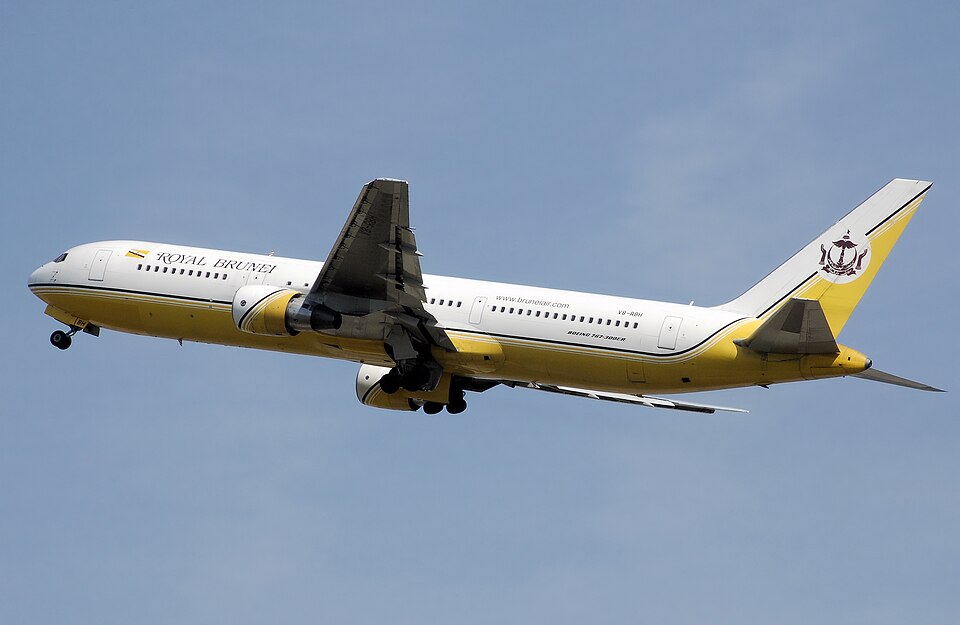
On 3 March 2007, at approximately 1630 UTC, a Boeing 767-300ER (registration V8-RBH) was conducting a commercial passenger flight from London Heathrow Airport. During the takeoff run on Runway 27L, the flight crew observed an illuminated brake temperature warning light. The status page indicated that the No 1 brake temperature was rapidly increasing, reaching level 6 and then level 7. Suspecting a binding brake, the crew rejected the takeoff at around 90–100 kt. The aircraft was brought to a stop and vacated the runway onto a taxiway without further incident.
Post-Event Actions
The No 1 brake temperature continued to rise to level 9. Fire services were requested as a precaution, and the wheel was sprayed with water, though no fire was present. Passengers disembarked normally via the aircraft's steps, and no injuries were reported among the 11 crew and 189 passengers. The aircraft was towed to a stand, where the severely damaged No 1 wheel was replaced. The aircraft later flew empty to the operator's base for further maintenance.
Engineering Investigation
A detailed metallurgical examination of the wheel hub was conducted. The hub consisted of inner and outer parts, both manufactured in 1994. The wheel had last been inspected and installed in December 2006, accumulating 1,145 flying hours and 205 cycles since then.
Examination revealed that a large, nearly cylindrical section of the inner hub had become detached. The separation occurred in a specific region (as indicated in Figure 4 of the report). The inner bearing housing had separated and severely overheated during contact with the main inner hub, which likely caused the temperature warnings. The initial failure of the inner hub was attributed to fatigue, stress corrosion, or a combination of both. However, a precise assessment was impossible due to extensive heat and mechanical damage, further complicated by rapid cooling from fire service water. No evidence of bearing failure was found.
Conclusion
The investigation was unable to determine the precise cause of the hub failure. Consequently, no safety recommendations were made.
Additional Note
The commander noted that no EICAS message or aural warning exists to alert flight crews of this specific fault.