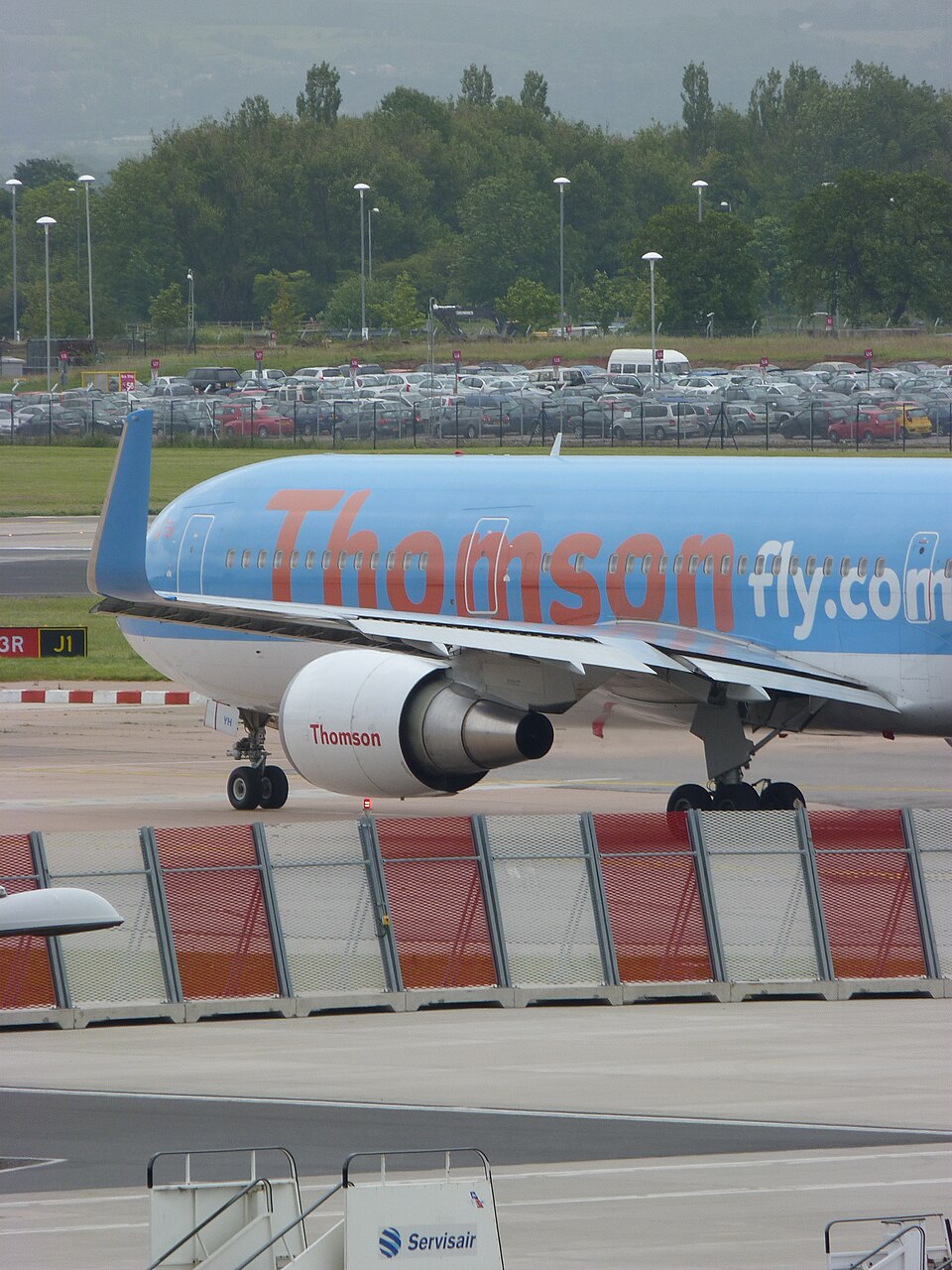
Incident Overview
On 21 October 2004, a Boeing 767-304 (registration G-OBYH) operated a public transport flight. After a normal landing at Amsterdam Airport, a visual inspection revealed scuffing and embedded glass fragments in the No 1 mainwheel tyre. The aircraft had previously operated two sectors involving Edinburgh Airport: a landing on Runway 06 and a subsequent takeoff from Runway 24. Both manoeuvres required a clockwise turn at the threshold of Runway 24.
Inspection and Findings
The landing at Edinburgh had been conducted in darkness on a wet runway. An exterior inspection performed before the next flight—a takeoff at dawn on a dry runway—showed no indication of tyre damage. However, later inquiries confirmed that four runway lights near the threshold of Runway 24 at Edinburgh were damaged. The commander believed the tyre damage occurred at Edinburgh, attributing it to an error of judgement regarding the lateral displacement of the left main landing gear from the runway edge during a 180° turn. He noted that incorrect seat positioning and/or head movement may have contributed to the misjudgement.
Aircraft and Crew Information
The aircraft was a Boeing 767-304 with two General Electric CF6-80C2B7F turbofan engines, manufactured in 1999. The commander held an Airline Transport Pilot's Licence, was 54 years old, and had 13,450 total flying hours (6,886 on type). There were 11 crew and 313 passengers on board; no crew injuries were reported.
Damage
The damage was limited to embedded glass fragments and scuffing of the No 1 mainwheel. No other damage was reported.