Event Description
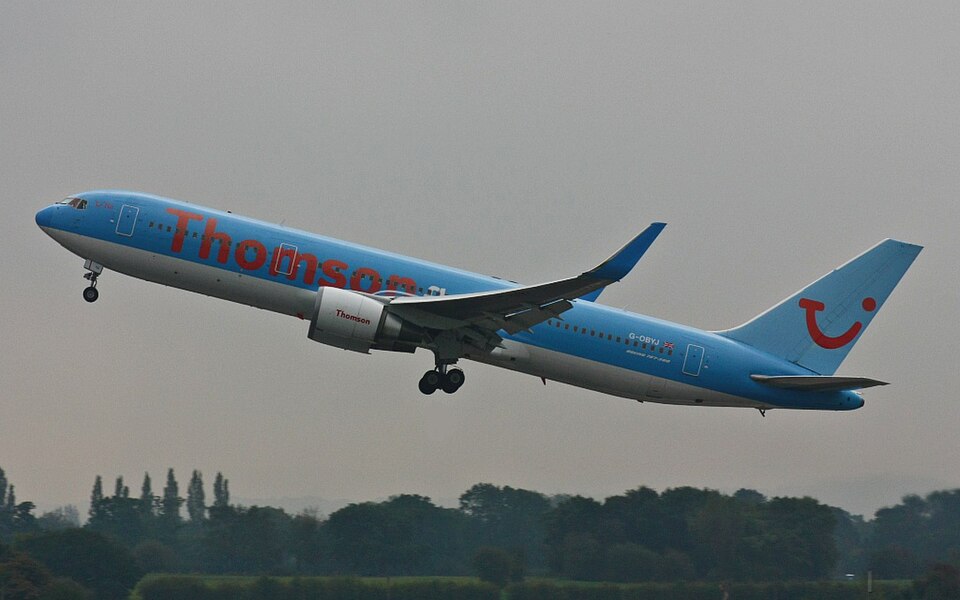
On 16 February 2005 at 0805 UTC, a Boeing 767-304 (registration G-OBYJ) was involved in a ground incident at Luton Airport. The aircraft had been pushed back from a parking stand onto the taxiway centreline for a positioning flight, with both engines running at idle. The ground handling crew, consisting of a tug driver and a headset operator, received an instruction from air traffic control to tow the aircraft forward. During the forward manoeuvre, the towbar's shear pins failed. The tug driver applied the tug brakes, but the aircraft continued moving forward under its own inertia and idle thrust, causing the towbar to jack-knife and the aircraft's forward fuselage to strike the roof of the stationary tug. The flight crew could not see the developing ground events as the aircraft structure obscured their view.
Damage and Injuries
The aircraft sustained a puncture to the underside of the fuselage aft of the nose landing gear, two bent fuselage frames, and damage to the left nose landing gear tyre. The tug driver and headset operator were not injured; the two flight crew members also reported no injuries. No passengers were on board.
Towbar Examination
Examination of the two towbar shear pins revealed that both had suffered shear overload failures at two locations on their shanks, as intended by design. However, one pair of shear faces was heavily corroded, indicating that this shear had been complete for a considerable period; the other shear failures were relatively bright. This indicated that the bolt shank had been subjected to an overload in the past and that the towbar had received no substantial maintenance since that time.
Towbar Ownership and Maintenance
The towbar involved was the only Boeing 767 towbar generally available to the handling agents. Enquiries revealed that ownership was unclear: the aircraft operator believed they had transferred ownership to the ground handling company years earlier, while the handling company believed the towbar still belonged to the operator. No records substantiated either view. As a result, neither organisation performed maintenance on the towbar for a considerable period. The Service Level Agreement stated that the handling company would provide towbars for pushback and that any towbars in their possession would remain their responsibility for repair and replacement, but ownership would remain with the operator. The handling company's maintenance schedule required partial disassembly and inspection every ten weeks, but the towbar lacked an asset number, undermining traceability.
Ground Crew Training
Both ground crew members had recently received training and qualified for push-back manoeuvres only. Neither had received training for towing or 'pull-forward' manoeuvres. The tug driver had been instructed during push-back training to apply the tug brakes in the event of shear pin failure—appropriate for push-back but inappropriate for forward towing, as it could cause the aircraft to collide with the tug. The handling company had a separate 'Towing' training module, but only two tug drivers had completed it, and the module required engines off. The crew were thus not prepared for a forward tow with engines running.
Context of Ground Operations
ATC at many major airports, including Luton, require 'push and pull' procedures with engines running to expedite traffic flow. These procedures were regularly used at the airport, and the handling company's tug drivers did carry out pull manoeuvres relatively frequently, but only two had undergone towing training. Following the incident, both the handling agent and the aircraft operator changed their procedures for push-back and pull-forward operations.
Oversight and Standards
The Civil Aviation Authority (CAA) publication CAP 642 provides guidance on safe operating practices for airside activities but does not define training standards or equipment suitability. JAR-OPS requires Air Operator Certificate holders to establish ground staff training standards. However, no regulatory requirements or enforceable standards exist for ground handling agents or their equipment. The airport operator had previously become concerned about the handling company's standards and had given notice to cease operations, but later withdrew the notice following assurances.
The AAIB noted that this accident resulted from ground handling staff being asked to perform a task for which they had not been trained, and using a towbar that was not maintained and was unserviceable due to ownership misunderstandings. The AAIB issued Safety Recommendations 2006-118 and 2006-060 to remind AOC holders of their responsibilities and to urge airport operators to ensure safe maintenance and use of mobile ground equipment.