History of Flight
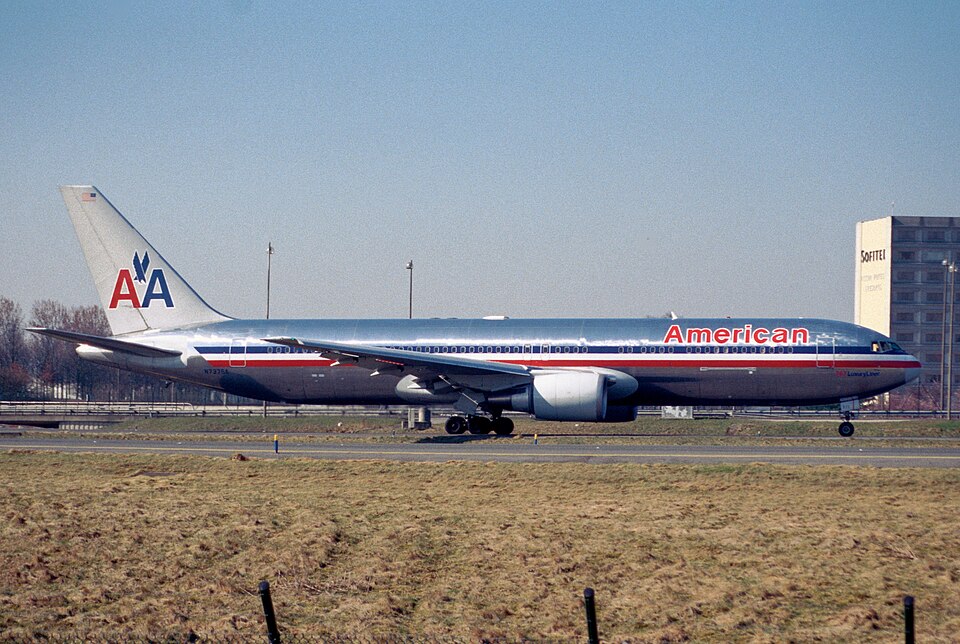
The aircraft, a Boeing 767-323 registered N7375A, was operating a scheduled international passenger flight from Brussels Airport, Belgium, to Chicago O'Hare, USA. During climb through flight level 137, the forward pylon strut fairing above the right engine detached and struck the adjacent leading edge slat. The commander noticed a slight noise but did not consider it significant. A passenger later informed cabin crew that a metal fairing piece had disappeared from above the right engine. The first officer inspected and confirmed the fairing was missing and the slat damaged. The commander discontinued the climb, reduced airspeed to 280 knots, and after consulting with company operations, decided to divert to London Heathrow Airport. An uneventful overweight landing was performed with normal flap and slat deployment.
Examination
The detached panel was the No 2 forward pylon strut fairing. Scrape marks on the engine cowling indicated the fairing rotated outboard about its aft end during detachment. It struck the No 8 slat, damaging a 0.4-meter length of the leading edge. No other aircraft damage occurred. The fairing was recovered near Sleidinge, Belgium. Examination showed no damage to the panel or its attachments. The hook latches were found engaged but the left-hand side button was not completely flush, suggesting the hooks had not engaged with their associated pins.
Fairing Installation
On Boeing 767 aircraft with GE engines, the forward pylon strut fairing is designed to be quickly removable via two hook mounts and two hook latches. Installation involves placing the fairing on the strut, moving it aft to engage the hook mounts, and fastening the hook latches by pushing the mechanism so hooks engage with hook bolts. When properly fastened, the latch button is flush with the fairing surface. A placard on the fairing cautions engineers to ensure arrow tips align and the hook is properly latched. It is possible to perform the procedure with the fairing not centralised, resulting in unlatched hooks while the button appears flush.
Previous History
The operator had a similar event in 1991 when the forward fairing was lost on take-off at New York JFK Airport. That incident was attributed to improper latching, leading the operator to add a caution note next to each latch. Since then, one or two additional panels were lost. An investigation into another operator's 1996 incident also concluded that improper latching was the cause.
Discussion
The cause of the fairing separation could not be conclusively determined. However, given previous history and the absence of damage to the fairing latches, it is likely the fairing was not properly latched. It was not possible to determine when the last maintenance occurred in this area; the fairing may have been unlatched for a significant period. The manufacturer is reviewing the latch design for possible changes.