Incident Synopsis
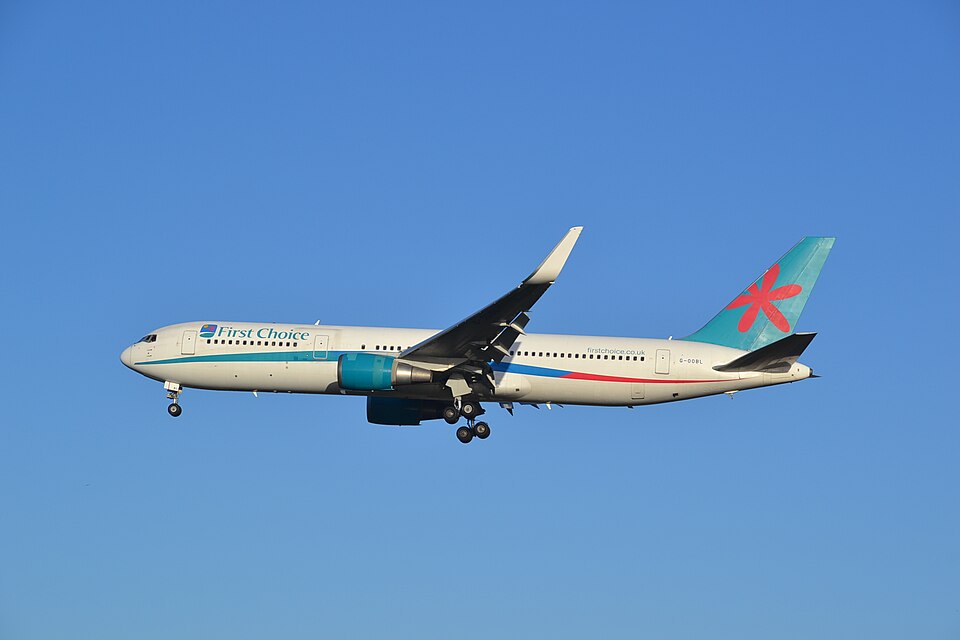
On 9 May 2008, at approximately 1230 UTC, a Boeing 767-324 (registration G-OOBL) was undergoing pre-startup checks at Manchester Airport when the In-Flight Supervisor reported a burning smell in the rear cabin. The commander investigated, confirmed the odor, and decided to disembark the passengers. During the disembarkation, an engineer informed the commander that the aircraft was "on fire" and instructed him to "kill" the power. The commander made a mayday call to air traffic control, switched off all aircraft electrical power, and exited via the normal exit. No injuries were reported among the 11 crew and an unknown number of passengers.
Engineering Examination
Post-incident examination revealed that the three-phase electric motor driving the potable water air compressor (part number 60B50012-9) had severely overheated. The unit, mounted under the rear cabin floor, showed discoloration of protective paint consistent with exposure to at least 125°C. The motor's internal rotor had separated from its core due to heat. The current-sensing overheat switch, a three-phase device with three sets of contact points, had one set welded or fused together, preventing it from interrupting power. The 15-amp circuit breakers for the compressor had not tripped. Additionally, the unloader check valve (part number CV99-191), fitted between the compressor and the potable water tank, was found to be leaking and required replacement.
Potable Water System Details
The potable water pressurization system comprises a self-contained 0.5 horsepower, three-phase, 400 Hz, 115/120 volt AC motor driving a double-bellows reciprocating pump, supplying clean air up to 40 psi to the water tank. A thermal protection switch inside the motor trips at approximately 200°F under normal current (11.5 A start, 7.5 A run) or at 600°F with no current, and automatically resets after 1.5 seconds. The unloader check valve maintains tank pressure and prevents water from entering the compressor. A secondary pressurization system is provided by engine bleeds, APU, or ground equipment.
Background and Service History
The aircraft manufacturer stated that three flight diversions had resulted from smoke or fumes generated by potable water compressor motor failures. Previous investigations indicated that the unloader check valve poppet could deteriorate, causing the valve to remain open, allowing moisture ingress. Tests on a Boeing 777 with the valve removed confirmed water could be forced into the compressor during tank refill. Over 200 units had experienced motor failure due to moisture ingress. Service bulletins and letters had been issued: in February 2007, operators were informed of a preferred unloader check valve (CV99-191) for Boeing 777, 767, 747-400, and 737NG aircraft. For Boeing 777 aircraft, the system was later replaced with a pump system, eliminating the valve. Changes for Boeing 767 aircraft were not yet implemented.
Safety Recommendation
The Air Accidents Investigation Branch issued Safety Recommendation 2009-090, recommending that the Federal Aviation Administration review the continued airworthiness of the potable water air compressor system fitted to Boeing 767 aircraft, to ensure that the compressor's electric motor does not overheat, causing the generation of acrid fumes and creating a fire hazard.