Incident
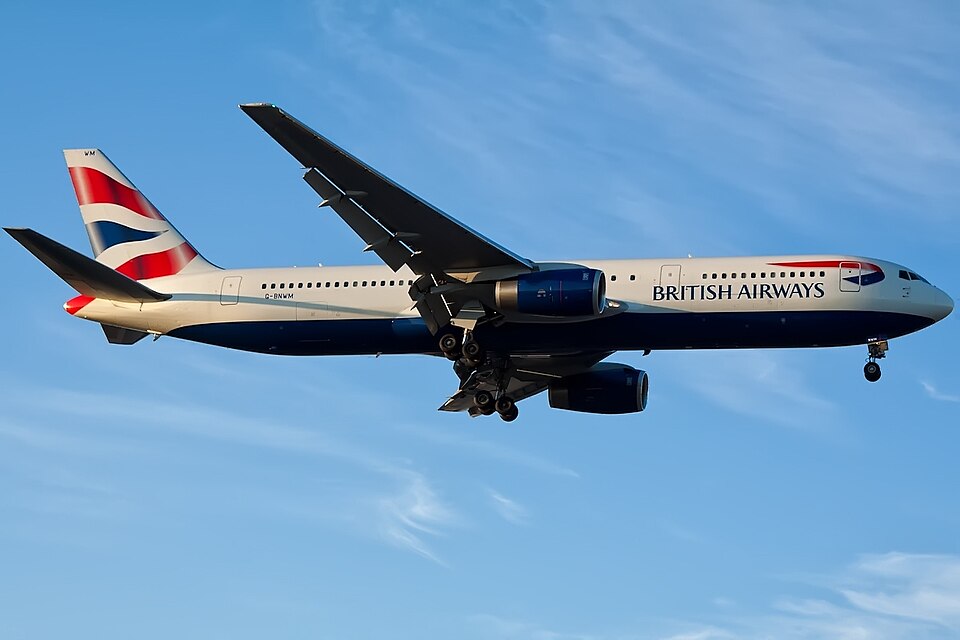
On 18 October 1999 at 0848 UTC, a Boeing 767-336 (registration G-BNWM) departed from Gatwick Airport on a scheduled passenger flight. As the aircraft climbed through approximately 450 feet above ground level, the crew heard a loud bang and the No 2 engine decelerated, accompanied by severe vibration. Several passengers observed flames emanating from the right engine. The pilots had previously seen a flock of birds pass beneath the aircraft and suspected a birdstrike, leading them to shut down the No 2 engine. The commander decided to return to Gatwick, executing an uneventful overweight landing.
Engine Examination
Subsequent inspection of the No 2 engine revealed that one fan blade had fractured, with the outer third (9 inches) of the blade becoming embedded in the fan duct acoustic lining, just ahead of the outlet guide vanes. Bird remains were found inside the engine. Adjacent fan blades exhibited typical soft body impact damage, including minor curling of their tips. The fan tip-path abradable lining was heavily gouged, and a segment extending over approximately 20° of arc was missing. Several holes and tears were present in the acoustic lining. All debris was contained within the nacelle.
Bird Identification
The bird remains were sent to the Birdstrike Avoidance Team of the Central Science Laboratory for species identification. The bird was determined to be a wood pigeon, a species that can reach a maximum weight of up to 740 grams (1.65 lbs).
Certification Background
The fractured and adjacent damaged blades were examined at the engine manufacturer's laboratory. Metallurgical analysis found no evidence of pre-existing cracks or material defects that could have made the blade particularly vulnerable to bird impact. The engine type had been certified to withstand ingestion of a volley of eight medium-sized birds (1.5 lbs each) at takeoff power, with a minimum acceptable residual thrust of 75%. In certification tests, the engine passed this requirement and was subsequently used for further tests without significant repairs. Although the ingested pigeon may have been slightly above the 1.5 lb medium bird weight, such an impact was not expected to cause a fan blade fracture. In-service experience with similar or larger birds had typically allowed the engine type to continue normal operation.
Abradable Liner Damage
An unusual aspect of the damage was the complete loss of a segment of the fan tip-path abradable liner. This segment had been previously repaired by an approved organization using an approved technique. The damage pattern suggested that the detached segment acted as a ramp, driven by the fan blade tips over the adjacent attached liner, inducing curling deformation of the blade tips. It is possible that this mechanism, combined with fan-case distortions from the birdstrike and engine surge, could have led to critical stresses in the fan blade, causing its aerofoil to fail.
Manufacturer Action
Because the loss of the outer third of a fan blade due to a medium-sized bird was inconsistent with the engine type's certification test results and previous service record, the engine manufacturer initiated an investigation into the strength and failure modes of the abradable liner, particularly after repairs.