Introduction
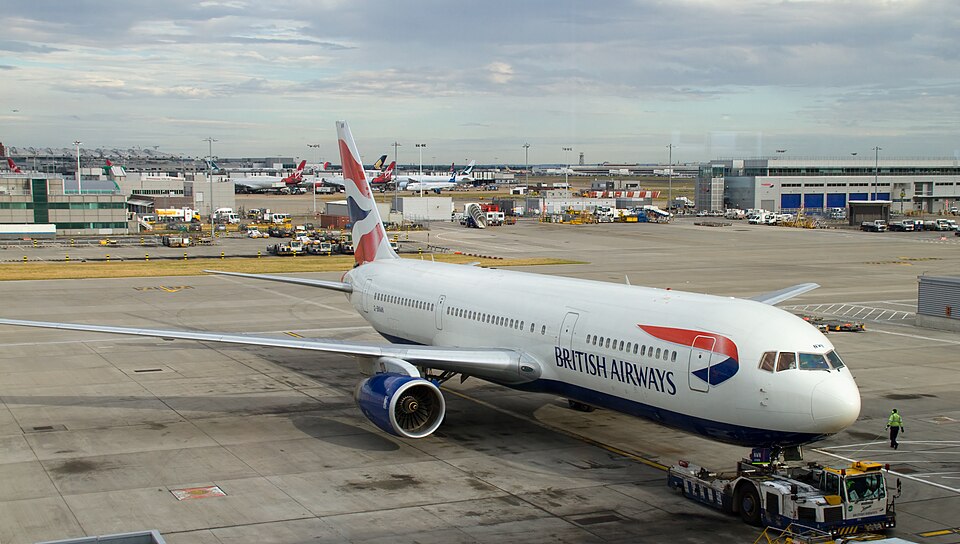
On 29 July 1999, at 1841 UTC, a Boeing 767-336, registration G-BNWN, was involved in a ground incident at Stand D46 of London Heathrow Airport. The aircraft, manufactured in 1991, was powered by two Rolls-Royce RB211-524H turbofan engines and operated on a public transport flight. There were 11 crew members and 223 passengers on board; no injuries were reported. The commander, aged 43, held an Airline Transport Pilot's Licence and had accumulated 9,000 total flying hours, including 800 hours on type.
Event Description
The aircraft was taxied onto the stand using the stand guidance system. After setting the parking brakes and shutting down the engines per the checklist, the jetty was moved toward the aircraft. A jolt was felt as the jetty made contact. Shortly thereafter, the dispatcher entered the flight deck and informed the commander that the jetty had 'run away', and the aft corner of the jetty floor had dented the aircraft skin. The dispatcher then notified the appropriate agencies.
During the final approach of the jetty, the dispatcher had slowed the movement as normal. Within the last few inches, the jetty lurched forward and struck the aircraft. The resulting damage was a 9 cm score to the panel forward of the No 1 door.
Jetty Design and Modification
The incident highlighted a design aspect of the Europier jetty's rubber protection strip. The metal floor plates were mounted above the top of the rubber protector strip. When the protection strip contacted the aircraft skin, the rubber could be forced downward, allowing the edge of the metal plates to contact the aircraft. Following the event, a modification was carried out on Airbridge D46 to install protective edging to the floor plate. This modification was scheduled to be applied to a further nine Thyssen airbridges.
Aftermath
The dispatcher promptly advised relevant agencies of the incident. No further operational details were provided. The aircraft sustained minor structural damage, and the jetty was subsequently modified to prevent recurrence.