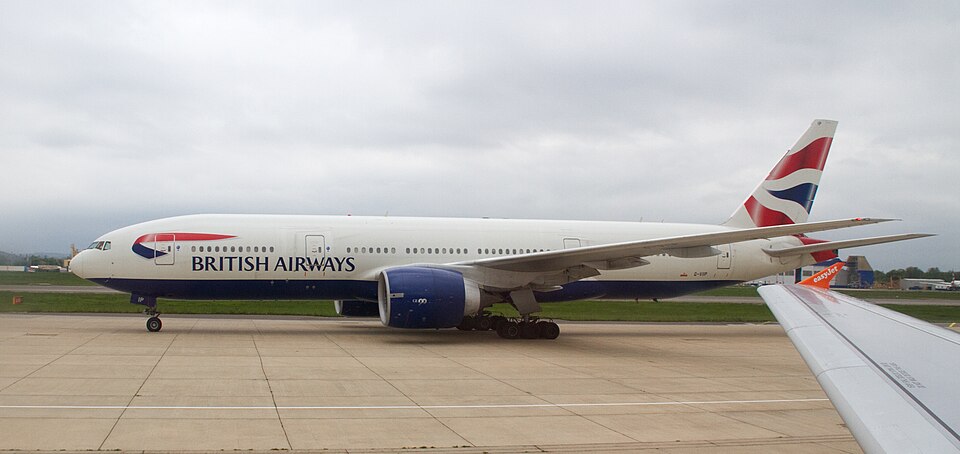
Aircraft and Flight
On 14 May 2006, a Boeing 777-236, registration G-VIIP, was operating a scheduled public transport passenger flight from Atlanta, USA, to London Gatwick, UK. The aircraft was cruising at Flight Level 370 (FL370) with 13 crew members and 257 passengers on board. The night was clear and dark, and no turbulence warnings had been issued on the Significant Weather Chart from the Washington World Area Forecast Centre, nor were there any reports from other aircraft on the same route.
Turbulence Encounter
While in cruise, the aircraft encountered a short period of unforecast severe turbulence. The weather radar was tilted one degree nose down but displayed no indications of likely turbulence. Both pilots visually acquired cloud directly ahead at short range and initiated an avoiding turn. The seat belt signs were switched on, and the speed was selected to Mach 0.82, the recommended turbulence penetration speed for that level. The aircraft entered the cloud and experienced two or three large jolts over approximately 10 seconds before exiting the cloud, after which the turbulence dissipated. Flight data recorder data showed a maximum vertical acceleration of 1.633g and a minimum of -0.023g two seconds later. There was also an uncommanded autothrottle disconnection.
Injuries and Aftermath
The turbulence occurred immediately after the seat belt signs were turned on, while cabin crew were serving refreshments from service trolleys. Two cabin crew members were thrown into the air along with a service trolley. A female passenger holding a baby had not yet returned to her seat and was also thrown into the air; she held the baby with both arms and could not break her fall, injuring her knees. The baby initially appeared uninjured and ate and slept normally for the remainder of the flight. An on-board doctor, assisted by medical advice from ground-based specialists, diagnosed the injuries as minor. The flight continued to London Gatwick, where an ambulance and paramedics met the aircraft upon landing. It was later discovered that the baby had suffered a broken leg.
The aircraft sustained no damage. Injuries: one crew member and two passengers (including the baby) sustained minor injuries.