Background
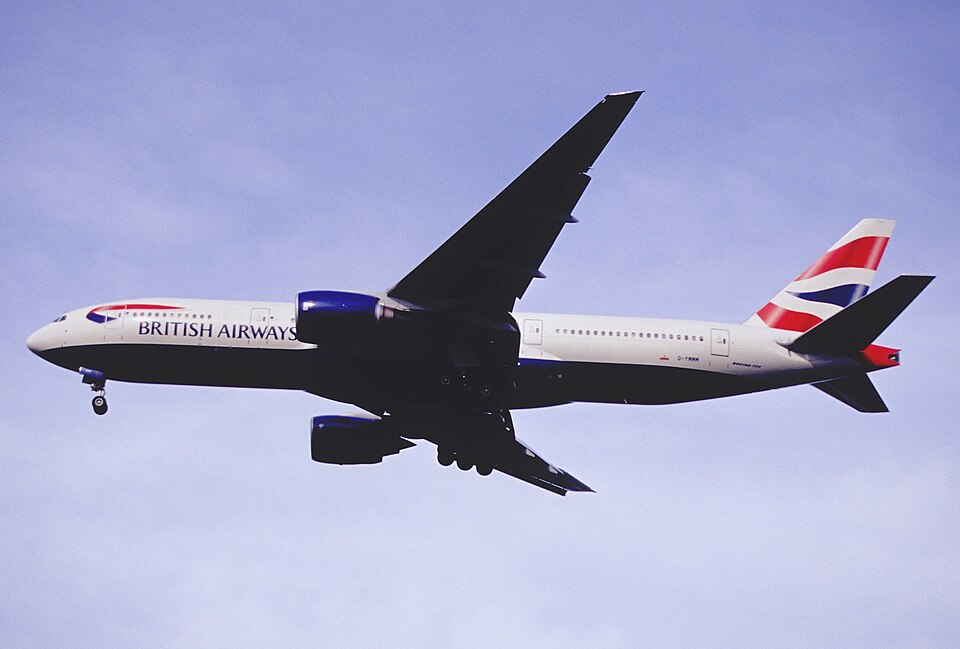
G-YMMM was operating a scheduled return flight from Beijing, China, to London Heathrow. The flight crew consisted of a commander and two co-pilots, with the additional co-pilot allowing for in-flight rest. No defects had been reported during the outbound flight. The flight plan included an initial climb to 10,400 m (FL341) with a descent to 9,600 m (FL315) due to predicted extreme cold at waypoint POLHO. The crew agreed on a total fuel load of 79,000 kg. The start-up, taxi, takeoff at 0209 hrs, and departure were uneventful.
Flight
During climb, air traffic control requested an initial cruise altitude of 10,600 m (FL348), which the crew accepted. They briefed to monitor fuel temperature en route due to low temperatures. The climb was completed using autopilot in Vertical Navigation mode. Approximately 350 nm north of Moscow, the aircraft climbed to FL380 using Vertical Speed mode. Another climb over Sweden brought the aircraft to FL400 in VS mode. The crew monitored fuel temperature, with a minimum indicated temperature of -34°C; no low fuel temperature warning annunciated. The flight continued uneventfully until the approach into Heathrow.
Approach and Thrust Loss
The commander was flying during the descent from FL400. The aircraft entered the hold at Lambourne at FL110, remaining for about five minutes and descending to FL90. It was radar vectored for an ILS approach to Runway 27L. At 1,000 ft above airfield level, 83 seconds before touchdown, the aircraft was fully configured with gear down and flap 30. At approximately 800 ft, the co-pilot took control as briefed. Shortly after, the autothrottles commanded increased thrust from both engines. The engines initially responded, but at about 720 ft, 57 seconds before touchdown, the right engine thrust reduced. Seven seconds later, the left engine thrust reduced similarly. Both engines continued producing thrust above flight idle but below commanded thrust. At 48 seconds before touchdown, the co-pilot noted 'split' thrust lever positions. At 500 ft, an automatic radio altimeter call occurred, and Heathrow Tower issued landing clearance, acknowledged by the crew. At 430 ft, the commander announced the approach was stable; the co-pilot responded 'just'. Seven seconds later, airspeed reduced below the expected 135 kt. Crew comments on the CVR indicated engines were at idle power and attempts to increase thrust—via autothrottle or manual thrust lever movement—failed. The autopilot maintained the ILS glide slope, causing airspeed to drop. At 115 kt, the 'airspeed low' warning and master caution sounded. The commander retracted flaps from 30 to 25 to reduce drag and moved what he believed was an engine starter/ignition switch. Airspeed continued to 108 kt at 200 ft. Ten seconds before touchdown, the stick shaker activated. The co-pilot pushed the control column forward, disconnecting the autopilot and reducing nose-high pitch. In the final seconds, the commander attempted to start the APU and transmitted a 'MAYDAY' call. The co-pilot pulled back on the control column, but the aircraft struck the ground in the grass undershoot of Runway 27L, approximately 330 m short of the paved runway and 110 m inside the airfield perimeter fence.
Impact and Evacuation
During impact and the short roll, the nose landing gear and both main landing gears collapsed. The right main landing gear separated from the aircraft; the left remained attached. The aircraft came to rest on the paved surface in the undershoot area. The commander attempted an evacuation call on the cabin PA system but inadvertently transmitted on Heathrow Tower frequency. The tower advised, and the commander repeated the call on the PA. The flight crew exited via escape slides at Doors 1L and 1R. Cabin crew supervised evacuation, and all occupants left via slides that operated correctly. One passenger suffered a serious injury (broken leg) from detached items of the right main landing gear penetrating the fuselage. Heathrow Tower initiated its accident plan, with a crash message at 1242:22 hrs; fire crews arrived 1 minute 43 seconds later. The evacuation was completed shortly after. There was a significant fuel leak from engines and an oxygen leak from disrupted passenger oxygen bottles, but no fire. Fuel continued leaking until manual closure of spar valves.
Investigation Findings
The investigation identified that the reduction in thrust was due to restricted fuel flow to both engines. The restriction on the right engine occurred at its fuel-oil heat exchanger (FOHE). For the left engine, the restriction most likely occurred at its FOHE, but limitations in available recorded data could not entirely eliminate the possibility of a restriction elsewhere in the fuel system. The likelihood of a separate restriction mechanism within seven seconds of the right engine's restriction was deemed very low.