Incident Summary
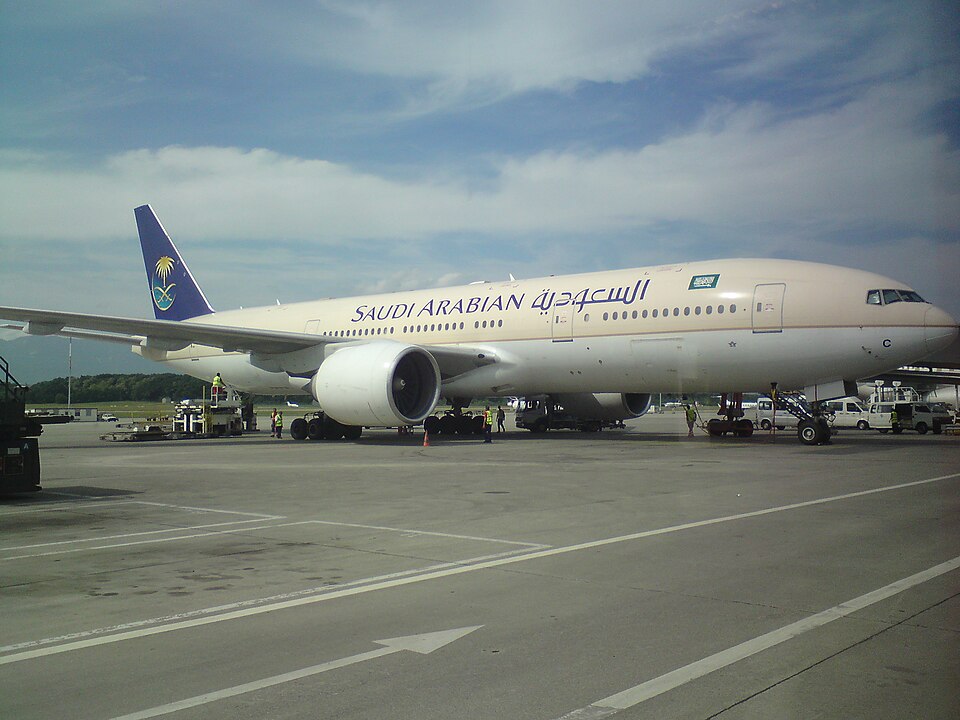
On 11 February 2009 at 1810 UTC, a Boeing 777-268ER (registration HZ-AKC) operated by a commercial airline was parked on Stand 319 at London Heathrow Airport. The aircraft had arrived and stopped in the correct parking position. The parking brake was set and both main engines were shut down, with the auxiliary power unit supplying electrical and environmental services. While passengers were disembarking, the aircraft began to roll backwards. The right hydraulic system AC electric pump was activated, reinstating hydraulic brake pressure and bringing the aircraft to a stop after approximately two metres of movement. During the rollback, the jetty structure made contact with the side of door L2, causing a minor abrasion to its surface. None of the 14 crew or 114 passengers reported injuries.
History of the Flight
The normal procedure for parked aircraft requires wheel chocks to be placed in front of and behind the nose landing gear wheels. Due to two stand changes, the chocks supplied by the ground handling agent did not arrive. The ground engineer asked the aircraft commander whether positioning the jetty and disembarking passengers with the brakes set, without chocks, was acceptable. The commander ensured the parking brake was ON and that the Engine Indicating and Crew Alerting System (EICAS) message confirming this was displayed. He then agreed to the engineer's request. The jetty was placed against door L2 and the door was opened. Disembarkation commenced.
When approximately 10 passengers and all crew remained on board, the aircraft began to move slowly backwards. The ground engineer notified the operator's maintenance manager, who was on the jetty, of the movement. The maintenance manager boarded the aircraft and entered the flight deck, where both pilots were in their seats conducting post-flight activities and were unaware of the aircraft movement. The manager selected the right hydraulic system to AUTO, activating the right hydraulic system AC electric pump. This re-pressurized the right hydraulic system, applied the parking brake, and stopped the aircraft.
Parking Brake System
The parking brake system uses hydraulic pressure supplied by the right hydraulic system, with a nominal 3,000 psi provided by an engine-driven hydraulic pump on the right engine accessory gearbox. When the engine is shut down, a hydraulic accumulator maintains pressure in the system. A secondary source of hydraulic pressure can be provided by a pump powered by the aircraft's AC electrical system. A brake pressure indicator gauge is located on the flight deck below the commander's Primary Flight Display (PFD), allowing the crew to monitor system and accumulator pressure. The gauge also has a BRAKE SOURCE caption that illuminates when there is no pump pressure. Two non-return valves and an accumulator isolation valve are designed to prevent hydraulic fluid leaking back into the system and pressure loss.
Maintenance Action
The aircraft was taken out of service. Engineers, using the Boeing Fault Isolation Manual, determined that the parking brake valve was defective. The valve component was replaced and a pressure decay test was carried out successfully, confirming the failure of the original valve. Engineers were informed that there may have been a previous problem with loss of accumulator pressure on the aircraft, but this could not be verified.
Safety Action
Following the incident, the operator introduced a requirement that their engineering vehicle would carry a set of chocks when attending an aircraft that was parking on a stand, in addition to the chocks provided by the ground handling agent.