What happened
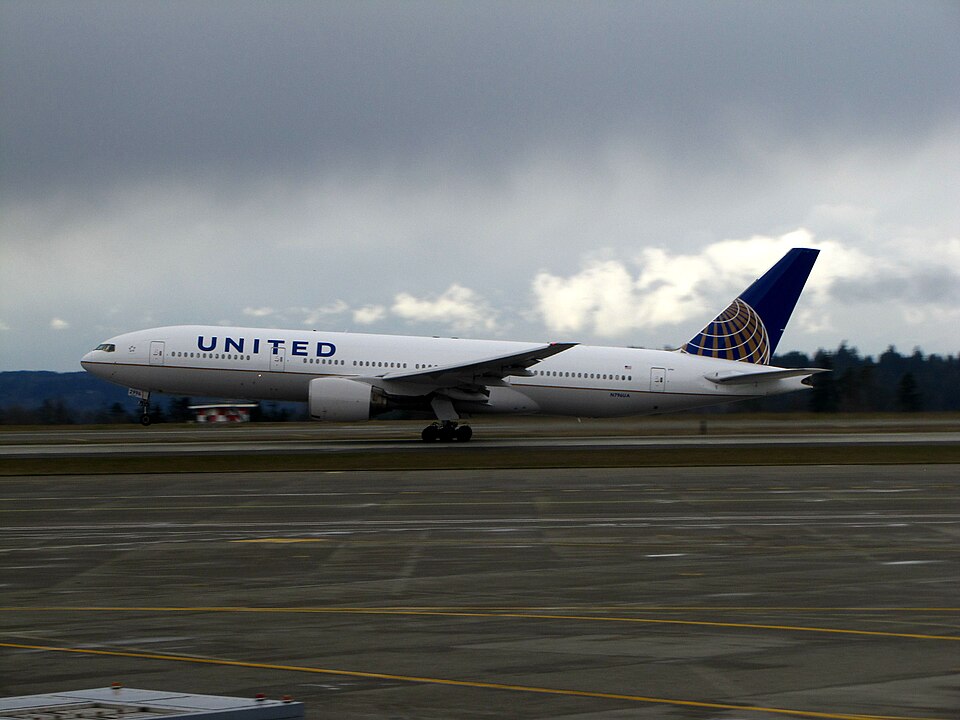
On 29 July 1998, a Boeing 777, registration N796UA, was operating a scheduled international flight from London Heathrow to San Francisco. Shortly after takeoff, the flight crew observed smoke emerging from the flight deck air vents. In response, the crew donned oxygen masks and continued manual flight control. As the aircraft climbed to 1,500 feet, cabin crew reported smoke spreading through both the first-class and coach cabins.
During the climb, the crew heard a loud bang from the left engine, accompanied by a sudden drop in N1 speed and oil quantity to zero. The crew declared an emergency and requested an immediate return to Heathrow. To manage the aircraft's weight, the crew initiated fuel dumping. Despite the presence of smoke and the engine malfunction, there were no corresponding warnings on the electronic indication and crew alerting system (EICAS).
The aircraft landed at Heathrow at 14:43:30 hrs, approximately 85,000 lb above its maximum normal landing weight. Emergency fire services followed the aircraft upon arrival, but no fire was visible externally, and passengers disembarked without injury.
The investigation
Investigators examined the No 1 engine and found significant internal damage, including sooting, melted wire insulation, and burned wire wraps within the fan case. A borescope inspection revealed that the No 1.5 and No 2 carbon seals had failed, and the No 1 to 2 bearing compartment had suffered heat damage.
Technical analysis of the Digital Flight Data Recorder (DFDR) confirmed a rapid loss of oil and an engine surge. The investigation also identified that a displacement of the N1 probe had corrupted the N1 signal, which inadvertently triggered the engine's overspeed fuel solenoid, reducing fuel flow to a minimum. Furthermore, the investigation found that a small section of aluminium alloy conduit within the bearing compartment had melted during the internal fire.
Findings
- The primary cause of the incident was the failure of the No 2 carbon seal, which led to the rapid depletion of engine oil from 17 US quarts to zero.
- The loss of oil caused significant heating and damage within the bearing compartment and the engine nacelle.
- A displaced N1 probe caused a signal corruption that simulated an overspeed condition, triggering the fuel solenoid to reduce fuel flow.
- The aircraft's fire detection system did not provide a warning because the external fire was of low intensity and short duration.
- The engine was due for a modification to implement a new 'wet' face seal design during its next scheduled maintenance visit.