What happened
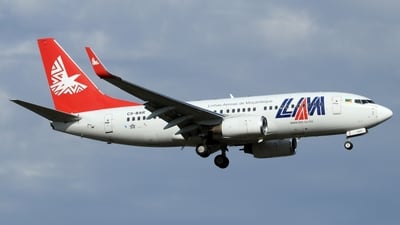
On February 26, 2021, a Boeing 737-700, registration C9-BAR, operated by LAM (Linhas Aéreas de Moçambique), was performing a scheduled flight from Maputo to Quelimane. The aircraft was carrying 99 passengers and 5 crew members.
During the landing phase on runway 18 at Quelimane Airport, the crew experienced difficulty decelerating the aircraft. To prevent the plane from overrunning the end of the runway, the pilot decided to steer the aircraft to the left, away from the runway threshold. The aircraft exited the paved surface and entered a soft ground area near the runway turnaround (raquete), where it became embedded at an angle of 52 degrees relative to the runway axis. The aircraft traveled approximately 1,300 meters from the initial touchdown point before coming to a complete stop.
There were no fatalities and no serious injuries among the passengers or crew. The aircraft sustained damage including a broken nose gear wheel, a broken left main gear outer wheel, damage to the nose gear door, and dents to the left engine inlet.
The investigation
The investigation by the IACM examined the flight data recorder (FDR) and the operational environment. Investigators noted that the aircraft touched down beyond the 1,000-foot marker on runway 18.
The inquiry also reviewed meteorological conditions, noting a recent SPECI report indicated rain and wind gusts up to 26 knots. Furthermore, investigators found that a small aircraft had landed at the airport shortly before the incident but had failed to notify Air Traffic Control regarding the current physical condition or braking effectiveness of the runway. Additionally, the tower did not communicate the presence of a wet runway to the crew of C9-BAR.
Review of aircraft and crew documentation revealed several irregularities, including discrepancies in flight hour logs for the pilot and inconsistent entries in the aircraft's maintenance logs regarding flight hours and cycles.
Findings
- The crew was unable to maintain sufficient deceleration on the runway surface.
- The runway surface was wet, which contributed to the loss of braking effectiveness.
- Air Traffic Control failed to notify the crew of the wet runway conditions.
- A preceding small aircraft had not reported runway braking conditions to the tower.
- Discrepancies were noted in the maintenance and flight hour records for both the crew and the aircraft.