No fatalities

1989-10-02: Cessna 501 Citation I (N617CC) — Harry W. O’Conner — Sedona, United States of America

Sedona, United States of AmericaLanding (descent or approach)

On October 2, 1989, a Cessna 501 Citation I (registration N617CC) operated by Harry W. O’Conner was involved in an aviation accident near Sedona, United States of America during landing or approach. No fatalities were reported. Investigators recorded the probable cause as: Improper in-flight planning/decision by the pilot which resulted in his inability to flare the aircraft and/or recover from a bounced landing. This summary draws on records from the Bureau of Aircraft Accidents Archives (B3A).

Sourcesthe Bureau of Aircraft Accidents Archives (B3A)Primary reportUpdated 1781213612Data APIEditorial standards
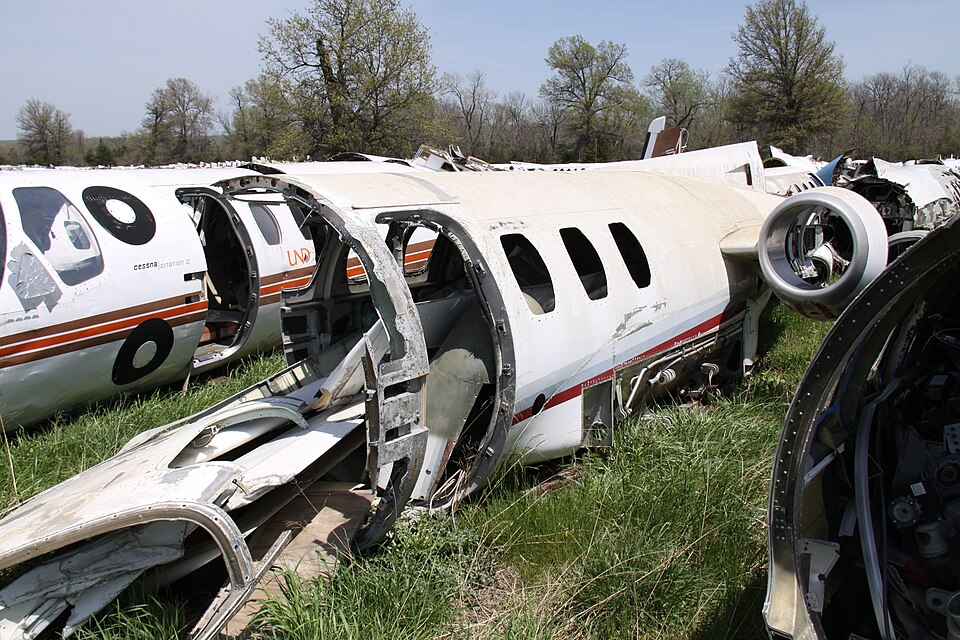
Aircraft registered N617CC
Aircraft registered N617CC. Photo: Aeroprints.com / CC BY-SA 3.0, via Wikimedia Commons

During arrival at Sedona with gusty winds, a pilot encountered strong turbulence and a downdraft on final approach. After touching down, the aircraft porpoised three times, entered a stall, and went off the runway into a wooded area.

Event Details

During arrival, the pilot contacted Sedona unicom and was advised that runway 21 was in use and that the winds were gusting to 25 knots. The pilot reported strong turbulence throughout the traffic pattern. Full flaps were lowered on final approach.

Approach and Landing

A strong downdraft was encountered on final approach, and power was increased 'to maintain vasi and vref.' Turbulence and a downdraft were reported to be exceptionally strong over the threshold. The pilot stated the aircraft touched down on all three gear, then it pitched up and began to porpoise with increasing amplitude.

Attempt to Recover

On the second touchdown, power was applied, but the engine needed 5 to 7 seconds to spool up. The pilot said that after the aircraft porpoised three times, it was in a stall from which it would not recover.

Outcome

Subsequently, the aircraft went off the right side of the runway, crossed a parallel taxiway, and entered a wooded area before stopping. No mechanical problem of the aircraft was reported that would have resulted in the accident.

Probable cause

Improper in-flight planning/decision by the pilot which resulted in his inability to flare the aircraft and/or recover from a bounced landing. Contributing factors were: crosswind, gusts, turbulence, downdraft, and the pilot's inadequate compensation for wind conditions.