3 fatalities

2017-12-14: Cessna 510 Citation Mustang (OE-FWD) — Skytaxi Luftfahrt — Sieberatsreute, Germany

Sieberatsreute, GermanyLanding (descent or approach)

On December 14, 2017, a Cessna 510 Citation Mustang (registration OE-FWD) operated by Skytaxi Luftfahrt was involved in an aviation accident near Sieberatsreute, Germany during landing or approach. 3 people were killed. Investigators recorded the probable cause as: The aircraft accident was caused by a sudden loss of control of the aircraft in clouds while turning in for the approach to Friedrichshafen at night. Probably the frontal weather with light to moderate turbulence, snowfall and icing contributed to this. This summary draws on records from the Bureau of Aircraft Accidents Archives (B3A).

Sourcesthe Bureau of Aircraft Accidents Archives (B3A)Primary reportUpdated 1781191613Data APIEditorial standards
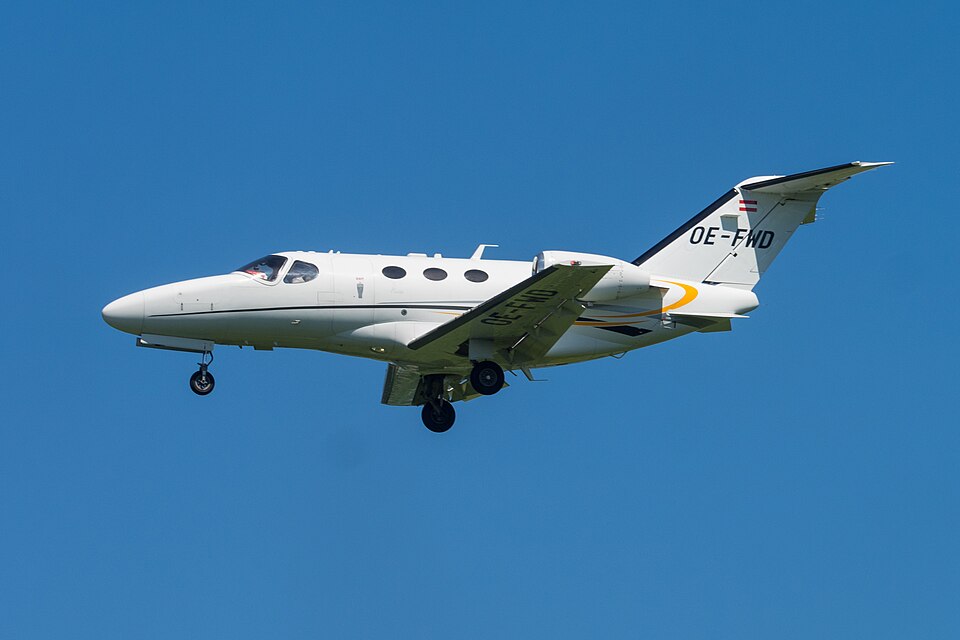
Aircraft registered OE-FWD
Aircraft registered OE-FWD. Photo: Markus Eigenheer / CC BY-SA 2.0, via Wikimedia Commons

A charter flight from Egelsbach to Friedrichshafen crashed after losing control during a turn in clouds. The aircraft disintegrated on impact, killing all three occupants. Icing and turbulence may have contributed.

Overview

On a charter flight from Egelsbach Airport, a twin-engine aircraft departed at 1743LT with one passenger and two pilots, bound for Friedrichshafen-Bodensee Airport. The flight was uneventful at Flight Level 210 until the crew contacted Zurich Air Traffic Control Center and received clearance to begin descent, with a planned ILS approach to Runway 24.

Descent and Loss of Control

After descending past 4,000 feet at a speed of 240 knots, the crew was completing a turn in clouds when the aircraft entered a rapid and uncontrolled descent. The airplane crashed in a wooded area near Sieberatsreute, approximately 15 kilometers short of the runway threshold. The impact was severe, resulting in the disintegration of the aircraft and fatal injuries to all three occupants.

Investigation Findings

The official investigation concluded that the accident was caused by a sudden loss of control while turning in clouds at night. It was noted that frontal weather conditions, including light to moderate turbulence, snowfall, and icing, likely contributed to the incident. However, due to the lack of recorded data from onboard systems, the precise factors leading to the loss of control could not be determined.

Probable cause

The aircraft accident was caused by a sudden loss of control of the aircraft in clouds while turning in for the approach to Friedrichshafen at night. Probably the frontal weather with light to moderate turbulence, snowfall and icing contributed to this. The absence of information about the events on board the aircraft meant that it was not possible to determine the causes of the loss of control.