What happened
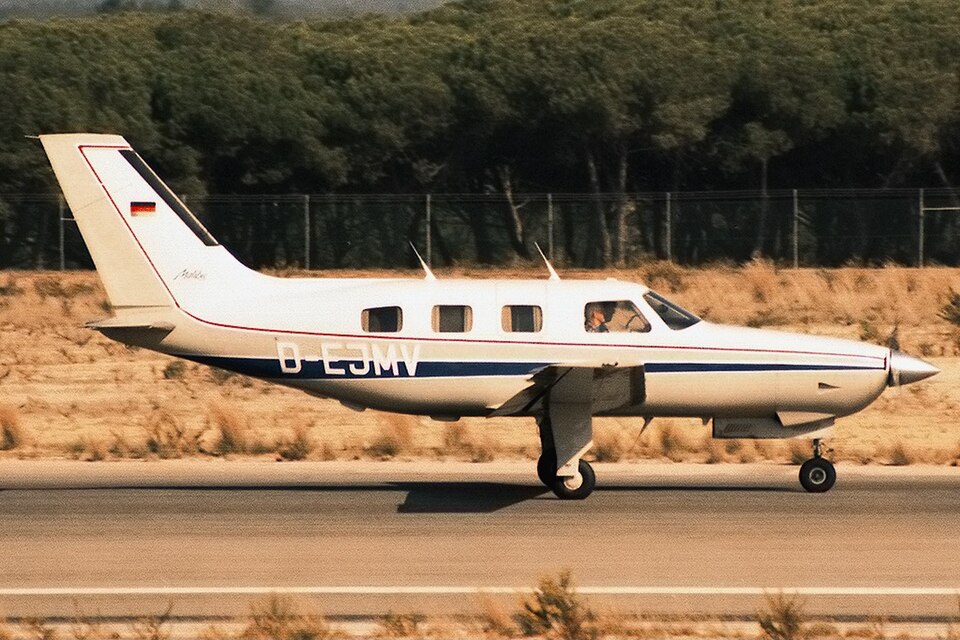
On July 16, 2006, a Piper PA-46-310P Malibu, registration D-EJMV, was performing a takeoff from Marina di Campo Airport on Isola d'Elba, Italy. The aircraft, operated by Mediair Gmbh Flugdienst-Ambulanzflüge, was carrying a pilot and four passengers on a recreational flight bound for Germany.
During the takeoff roll on runway 34, the local airfield operator observed black smoke emitting from the lower part of the engine and attempted to notify the pilot via radio. The pilot did not respond to the transmission. After lifting off, the aircraft initially followed the standard departure procedure but quickly entered a left-hand turn. GPS data and eyewitness accounts indicate the aircraft began to lose airspeed and altitude. The aircraft subsequently entered an aerodynamic stall at a very low altitude, causing it to impact a vineyard in the Le Solane area. The impact resulted in four fatalities and one survivor who later succumbed to injuries.
The investigation
The ANSV investigation focused on the technical state of the engine and the pilot's maneuvers. Investigators examined the Teledyne Continental Motors TSIO-550-C engine and found that the turbochargers were functioning at the time of impact. While the spark plugs showed signs of operating with a rich fuel mixture, no pre-existing mechanical failures were identified as the definitive cause of the smoke observed by the airfield operator. The investigation also analyzed GPS data, which revealed that the aircraft failed to maintain the required climb gradient and speed necessary to clear local obstacles.
Findings
- The primary cause of the accident was an aerodynamic stall occurring at low altitude.
- The pilot attempted a left-hand turn to return to the airport, likely in response to the engine smoke reported by the airfield operator.
- The aircraft's airspeed dropped significantly during this turn, preventing the pilot from recovering the aircraft before ground impact.
- While the exact source of the black smoke could not be determined, investigators noted that a malfunction in the auxiliary fuel pump switch (setting it to "HIGH") could cause engine irregularity or power loss.
- The pilot did not implement the emergency procedures outlined in the flight manual, though the investigation noted the extreme time pressure and low altitude made such actions difficult to execute.