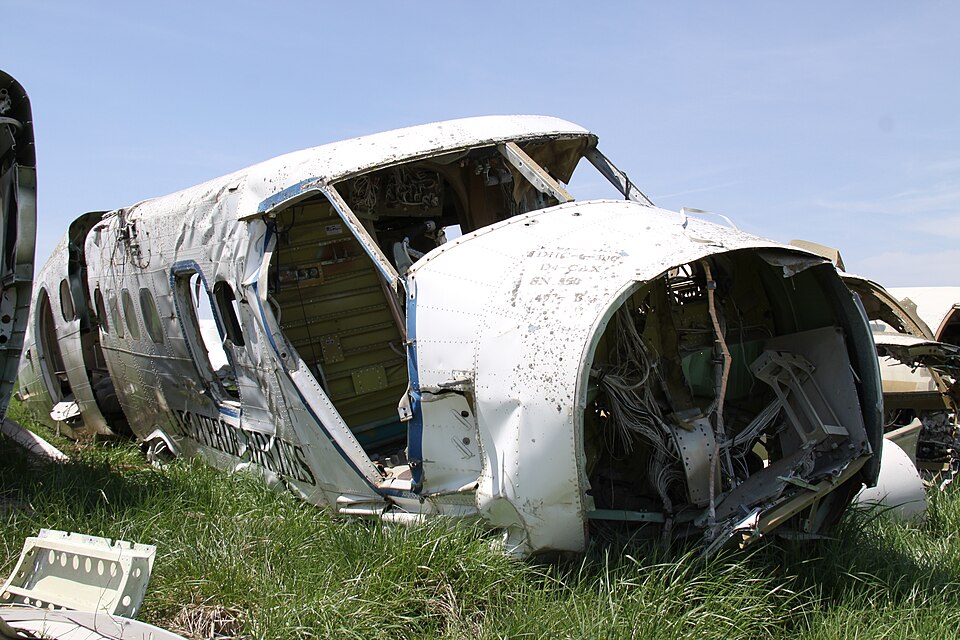
Accident
The twin-engine aircraft was conducting government flight VR5301 from Campo de Priguiça to Praia. On board were three crew members and Prime Minister Carlos Veiga, along with his team. While approaching Praia-Francisco Mendes Airport, the crew encountered adverse weather conditions, including thunderstorms, heavy rain, and strong winds. Air traffic control cleared the aircraft to execute a low pass over runway 22, followed by a sharp left turn. During the turn, the left wingtip struck the ground, causing the aircraft to become uncontrollable. It subsequently crashed 150 meters from the threshold of runway 04.
The impact resulted in the death of a passenger, the Prime Minister's bodyguard. The other 21 occupants sustained injuries, four of which were classified as serious.
Probable Cause
According to the official investigation, before departure from Campo de Priguiça, the crew was informed that weather conditions at Praia were good, with visibility of 10 kilometers and cloud base at 1,400 feet. However, the weather at Praia deteriorated while the flight was en route. The crew did not obtain a second weather bulletin from air traffic control at Praia. Furthermore, the aircraft departed with insufficient fuel reserves, which contributed to the precipitation of the final flight sequence.