Flight History
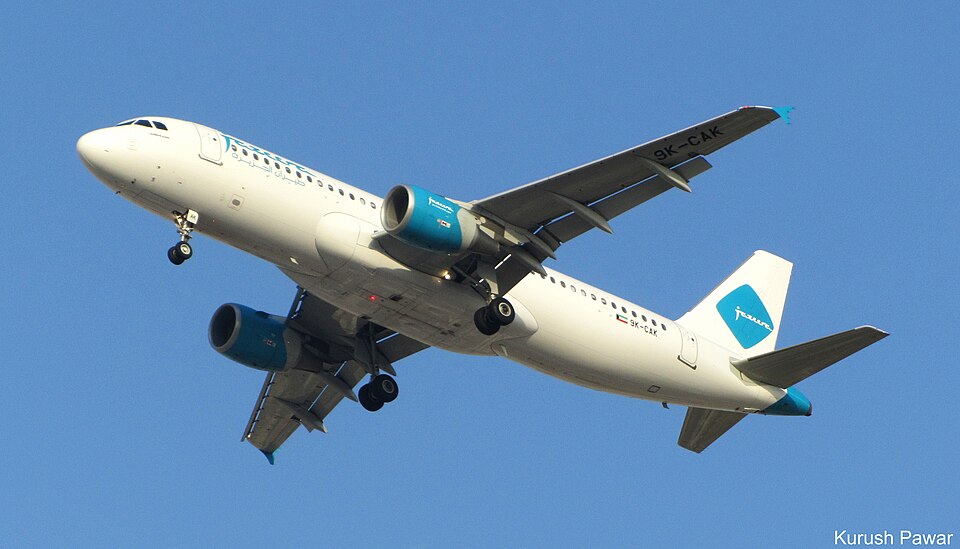
On 27 August 2017, an Airbus A320-214 aircraft, registration 9K-CAK, operated by Jazeera Airways, departed King Khaled International Airport (OERK) on scheduled flight J9-787 (JZR787) to Kuwait International Airport (OKBK). There were 142 persons on board: two flight crew, four cabin crew, and 136 passengers.
During the approach, the Approach Controller changed the sequence to place JZR787 as number three, after a preceding flight requested priority landing for medical assistance. JZR787 was instructed to stop descent at 5,000 ft and proceed to position Initial Approach Fix (IAF) IVETA and hold. The Controller then coordinated with Tower and Ground Control for the medical request, and the flight crew did not receive further holding instructions (direction and heading) before reaching IVETA.
As JZR787 flew on a track of 332 to IVETA, the Commander, who was the Pilot Monitoring (PM), entered a holding pattern on the Multi-function Control and Display Unit (MCDU) different from what he read back to the Controller. When the aircraft arrived at IVETA, it turned left for a parallel entry to the holding point. Approximately 52 seconds into the left turn, the aircraft entered a restricted area and collided with the cable of an active tethered military radar balloon.
The collision damaged the right engine inlet cowl and severed the balloon's tethering cable, causing the balloon to fly freely toward the sea.
Aircraft and Crew Information
The aircraft was an Airbus A320-214 with two CFM56-5 engines, serial number 4162. The crew consisted of a Commander and a Copilot. No injuries were reported among the 142 occupants.
Investigation Findings
The investigation classified the occurrence as a serious incident. It identified three causes:
(a) The aircraft entered the restricted area where the balloon was tethered without crew awareness about the restrictions.
(b) The Pilot Monitoring (the Commander) intentionally entered a track of 062 for a right-hand turn holding pattern on the MCDU instead of the aircraft's approach track of 332 to IVETA. This caused a left turn over IVETA for a parallel entry, deviating toward the restricted area.
(c) The Approach Controller was distracted from closely monitoring the radar screen and thus did not instruct JZR787 to avoid the restricted area when it began turning west of IAF IVETA.
Aftermath
The report includes 13 safety recommendations addressed to the Operator, Kuwait ATC Management, and the Directorate General of Civil Aviation of the State of Kuwait.