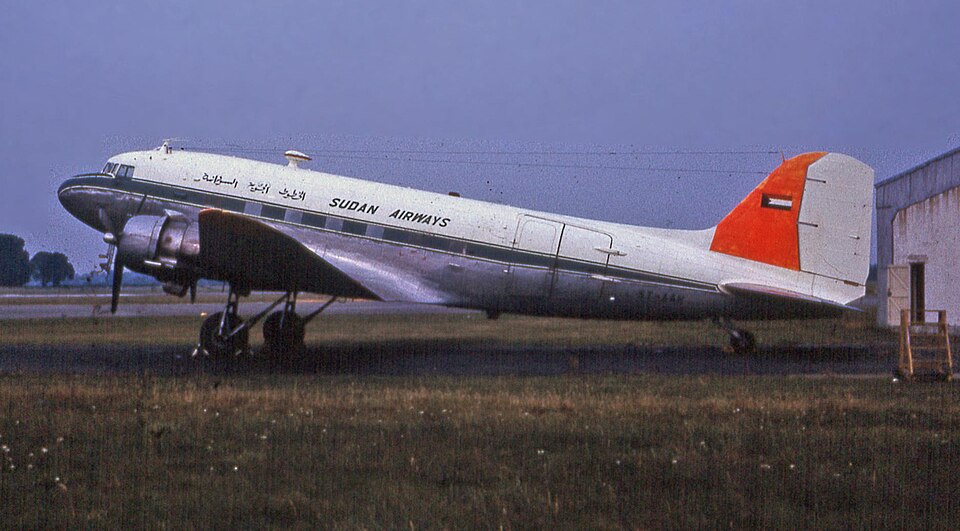
Accident
A local training flight was conducted at Khartoum-Haj Yusuf Airport. After completing several circuits and landings, the crew initiated a new approach to runway 36 with the engine at idle. The aircraft stalled, struck the roofs of two houses, and then impacted the ground. It collided with a truck and came to rest, broken into two sections. Two crew members were killed and two others sustained injuries.
Investigation
The official investigation was unable to determine a direct cause due to insufficient conclusive evidence. Based on available information, several possible contributing factors were noted. These included an unexplained initial turn to the port side, a loss of height likely resulting from the flaps being retracted from the 1/4 position to the 'UP' position, and witness accounts suggesting that after the aircraft began climbing, one or both engines 'coughed'. This could have been caused by inadvertent mishandling of throttle or mixture controls by the pilot under training as he left his seat, or by the pilot inadvertently switching off the port ignition switch while using the ignition master switch as support. Evidence of an explosion in the port exhaust system could have resulted from either of these events. If such an event occurred at the critical time when the training captain was regaining control, it may have created a situation impossible to recover from given the proximity of obstructions and the captain being alone in the cockpit.
Probable Cause
Due to the lack of conclusive evidence it is not possible to formulate an opinion as to the direct cause of the accident. From the evidence available it is possible that one or more of the following items could have contributed to the cause of the accident:
- No satisfactory reason has yet been put forward for the initial turn of the aircraft to the port.
- The loss of height after the turn was probably caused by the selection of the flaps from 1/4 position to the 'UP' position.
- From witness' statement it would appear that at some time after the aircraft was starting to re-commence climbing on one or both of the engines 'coughed'. This could have been caused by the inadvertent mishandling of either the throttle and/or mixture control levers by the pilot under training as he left his seat. The possibility also exists that he may have pulled himself up by the ignition master switch, at the same time inadvertently switching 'off' the port ignition switch. (Evidence of an explosion in the port exhaust system could have been caused by either of the above events).
- If anything like the possibility mentioned in item 3) did in fact occur it would have been just at the critical time when the Training captain was re-gaining control of the aircraft, and could have presented him with a situation from which it was impossible to recover, bearing in mind the proximity of obstructions and the fact that he was alone in the cockpit.