Ultralight Crash in Chonburi Kills Pilot Due to Wing Fabric Failure
An X-AIR HAWK ultralight crashed in Chonburi, Thailand, killing the pilot and injuring a passenger. The accident was caused by deteriorated wing fabric and…
On August 19, 2013, a Douglas DC-3 (registration C-GWIR) operated by Buffalo Airways was involved in an aviation accident near Yellowknife, Canada during landing or approach. No fatalities were reported. Investigators recorded the probable cause as: The official findings identified multiple causes and contributing factors: an incomplete take-off weight and balance calculation resulted in an overweight condition; a preexisting fatigue crack caused a right engine cylinder failure and fire; the right… This summary draws on records from the Bureau of Aircraft Accidents Archives (B3A); 8 related events involving the same aircraft type or operator are linked below.
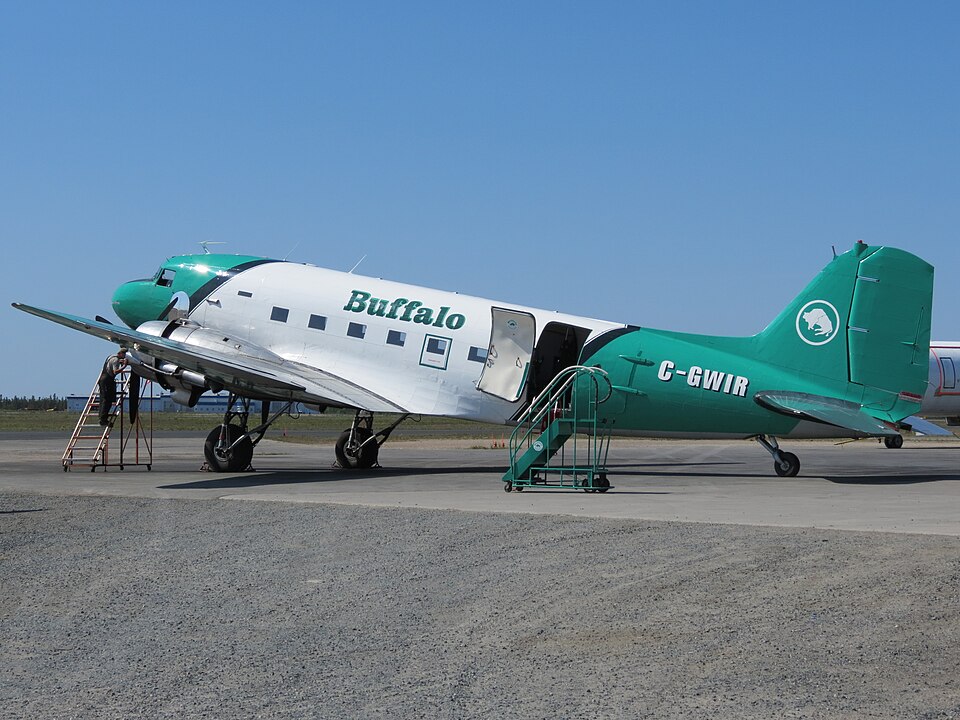
A Buffalo Airways DC-3C overran a runway after a right engine fire during takeoff from Yellowknife. The overweight aircraft struck trees and landed gear-retracted, but all 24 occupants evacuated safely.
The official findings identified multiple causes and contributing factors: an incomplete take-off weight and balance calculation resulted in an overweight condition; a preexisting fatigue crack caused a right engine cylinder failure and fire; the right propeller failed to fully feather likely due to a seized bearing in the feathering pump; the windmilling propeller increased drag, and combined with the overweight condition, prevented the aircraft from maintaining altitude, leading to a terrain collision. Ineffective operator safety management and Transport Canada surveillance allowed unsafe practices to persist.
An X-AIR HAWK ultralight crashed in Chonburi, Thailand, killing the pilot and injuring a passenger. The accident was caused by deteriorated wing fabric and…
A Challenger II Special ultralight aircraft (U-B23) landed off-runway at Pai Airport, Mae Hong Son, on September 17, 2024, due to a gust of wind. No injuries…
The Polish aviation safety authority is investigating a serious incident involving an AT-3R100 aircraft that occurred on September 2, 2024. The investigation…
A SZD-48-3 glider suffered damage when its left wing struck a ground obstacle during a low final approach at EPWK on June 20, 2025. The pilot was uninjured.
A 39-year-old skydiver died after a hard landing near Leszno on May 1, 2026. The PKBWL preliminary report indicates the fatal impact resulted from a late,…
A student pilot crashed an SZD-50-3 Puchacz glider into the airfield fence during a solo training flight on June 6, 2026. The pilot was uninjured, but the…