Background
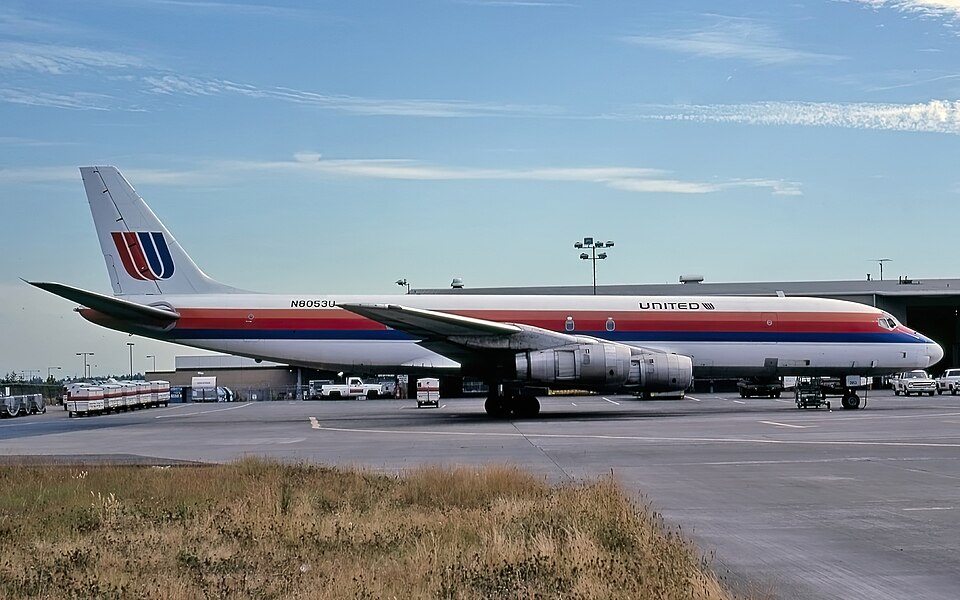
United Airlines Flight 2885 was a scheduled cargo flight from Cleveland to Los Angeles, with an intermediate stop in Detroit. The aircraft involved was a DC-8. The flight departed Cleveland at 01:15 and arrived at Detroit at 01:52. After unloading Detroit cargo, refueling, and loading Los Angeles cargo, the crew prepared for departure.
Sequence of Events
The engines were started, and the crew requested taxi instructions at 02:45:58. During taxi, the before-takeoff checklist was accomplished. The second officer called "trim," and the first officer responded "set." However, the stabilizer trim was inadvertently left at 7.5 units ANU, which was the previous landing trim setting, and was not adjusted for takeoff.
At 02:49:16, the crew discussed the first officer switching seats with the second officer. The swap occurred around 02:49:40. At 02:49:58, the flight called for clearance onto runway 21R and was cleared for takeoff at 02:50:03. The throttles were advanced for takeoff at 02:51:05, and power stabilized seven seconds later. The captain called out "eighty knots" and "Vee One," and the aircraft lifted off about 02:51:41. The airplane climbed with wings level to approximately 1,000 feet, then rolled to the right in a gradual turn until wings were vertical, crashing into a freshly plowed farm field.
Probable Cause
The flight crew's failure to follow procedural checklist requirements and to detect and correct a mistrimmed stabilizer before the aircraft became uncontrollable. Contributing to the accident was the captain allowing the second officer, who was not qualified to act as a pilot, to occupy the seat of the first officer and to conduct the take-off.