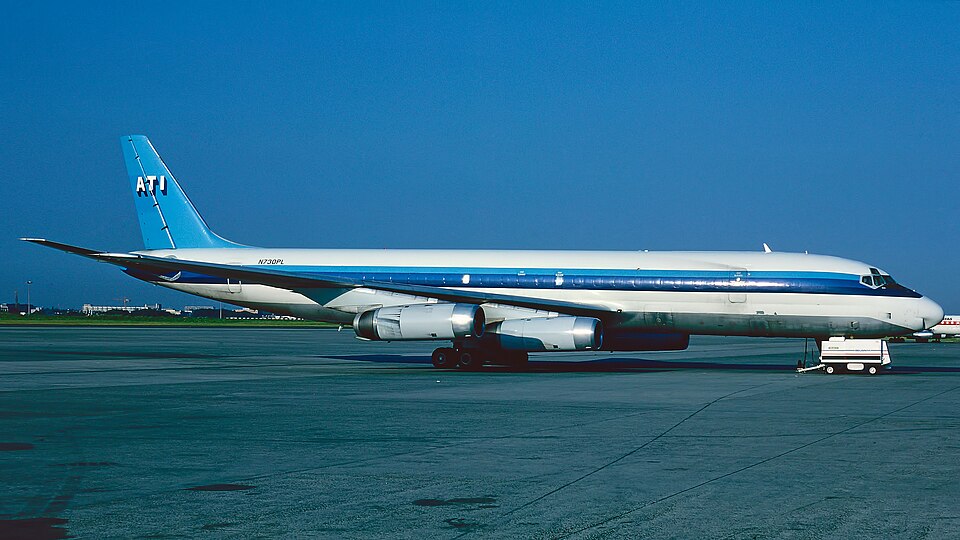
Incident Summary
Before departure, the flight engineer calculated takeoff speeds and horizontal stabilizer trim settings. The captain and first officer did not verify these calculations. During the takeoff roll, when the captain attempted to rotate, he noted that pulling the yoke aft required more force than normal and the aircraft would not fly at the indicated speed. He aborted the takeoff. Realizing the aircraft would not stop on the remaining runway, the captain steered to the right to avoid traffic on a highway near the departure end. The aircraft struck ILS equipment; the landing gear collapsed and all four engines separated. The aircraft was subsequently destroyed by fire.
Preflight and Takeoff
The flight engineer had computed the takeoff data based on a weight of 242,000 lbs. However, the actual takeoff weight was 342,000 lbs. The rotation speed (Vr) appropriate for the actual weight was 28 knots higher than the speed used. The incorrect data included both V speeds and the horizontal stabilizer trim setting.
Investigation Findings
Investigators revealed that the flight engineer improperly calculated the gross weight, leading to erroneous takeoff speeds. Additionally, the investigation found shortcomings in the operator's flightcrew training program and questionable scheduling of qualified but marginally experienced crew members for the accident flight.
Probable Cause
The official probable cause was improper preflight planning/preparation, in that the flight engineer miscalculated (misjudged) the aircraft's gross weight by 100,000 lbs and provided the captain with improper takeoff speeds; and improper supervision by the captain. Factors related to the accident were: improper trim setting provided to the captain by the flight engineer, inadequate monitoring of the performance data by the first officer, and the company management's inadequate surveillance of the operation.