What Happened
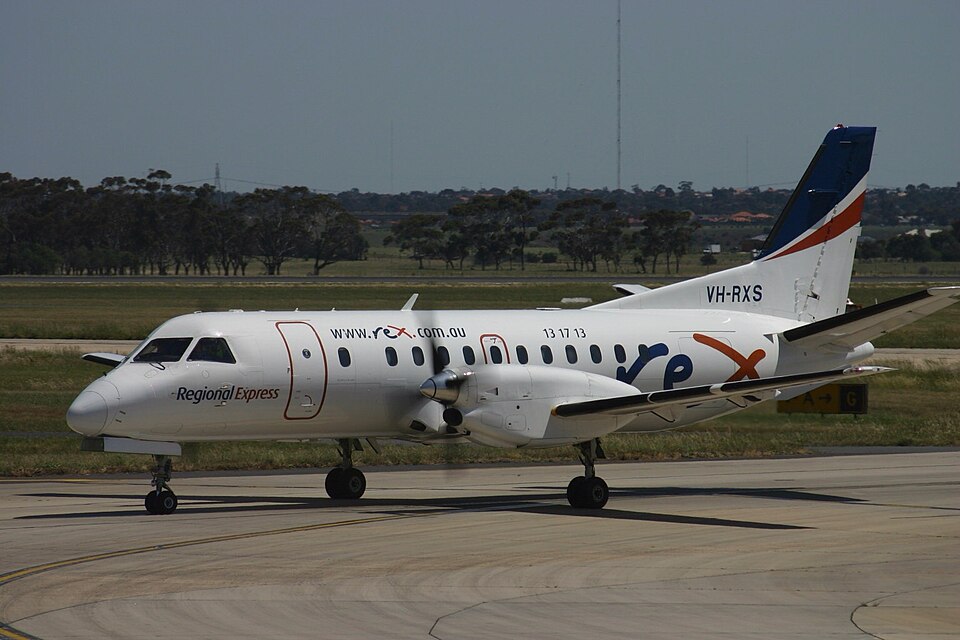
On 23 March 2017, at about 0944 Eastern Daylight-saving Time, a Regional Express SAAB 340B, registered VH-RXS, departed Dubbo Airport, New South Wales, for scheduled passenger flight ZL821 to Sydney. On board were three crew and 23 passengers.
As the aircraft climbed through about 4,300 ft, the flight crew heard several bangs from the right engine, accompanied by jolts. The cockpit master warning illuminated and the right engine instruments displayed multiple warnings. A burning smell was also present. The first officer, who was pilot flying, identified a right engine failure. The crew performed the memory items of the engine failure checklist, shut down the engine, and the smell dissipated.
After completing memory items, the crew commenced standard failure management procedures. They secured the right engine and determined the aircraft was performing satisfactorily. A PAN call was made to air traffic control, and emergency services were requested. The aircraft was descended to 4,000 ft and positioned to an area clear of cloud and traffic to reduce workload. The captain selected Dubbo as the most suitable airport for landing. After reviewing weather, the crew elected a visual approach and landing. The cabin crew member was briefed, and passengers were informed via the public address system. The captain contacted emergency services. In accordance with standard operating procedures, the captain assumed pilot flying duties before landing.
The aircraft landed on runway 05 at 1004. No persons were injured, and the aircraft sustained minor damage.
Captain Comments
The captain noted that the first officer remained pilot flying until the approach was prepared, allowing the captain to focus on the engine failure checklist. Emergency procedures and simulator training were effective, preparing the crew well and enabling effective management of the failure. The captain emphasised following procedures without rushing to ensure correct actions. The engine failure checklist included consideration of restarting the failed engine; however, as the right engine exhibited low oil pressure, over-temperature, and chip detector warnings indicating damage and non-recoverability, the captain elected not to attempt a restart. There was cloud in the area of the runway 05 RNAV approach; the captain chose to remain clear of cloud and conduct a visual approach, as entering cloud might have led to a single-engine missed approach. After the flight, the captain received reports that passengers were concerned about the time taken for the crew to update them.
Engineering Examination
The engine manufacturer conducted an engineering examination of the failed engine, but it was not completed in time for the report. An initial examination found that the number four bearing failed. The bearing failure allowed the high pressure compressor to move off-centreline, causing further damage and complete engine failure. The damage to the bearing was consistent with overheating due to lack of lubrication. The reason for the lack of lubrication had not been determined at the time of the report.
Findings
The right engine number four bearing failed, resulting in engine power loss.