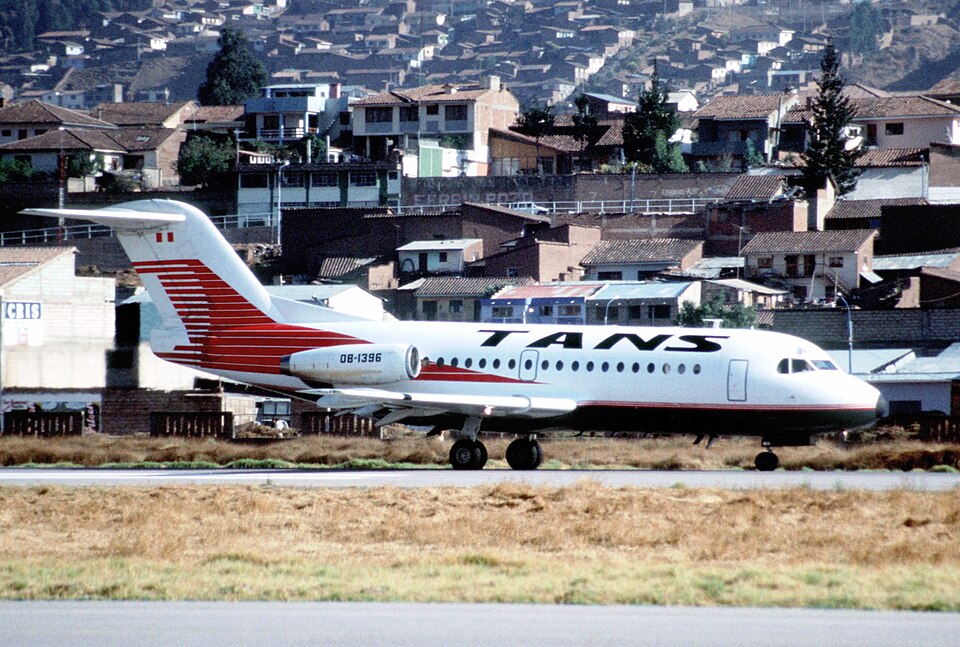
Accident
A commercial aircraft operating a scheduled flight from Lima to Chachapoyas with an intermediate stop in Chiclayo crashed into the slope of Mt Coloque. The aircraft was carrying 41 passengers and five crew members. After an uneventful flight from Chiclayo, the crew began descent to Chachapoyas Airport in poor weather conditions. The crew maintained several radio contacts with air traffic control, and all appeared normal on board when the aircraft struck the slope of Mt Coloque, located 15 km from the airport. Due to poor weather and the inaccessibility of the crash site, search and rescue teams arrived two days later. The wreckage was found at an altitude of 3,300 metres. The aircraft disintegrated on impact, and all 46 occupants were killed. The occupants included 41 Peruvians, two Belgians, one Dutch, one Spanish, and one Cuban.
Investigation
The investigation into the accident focused on the circumstances leading to the collision. The wreckage location and condition indicated a high-energy impact with the terrain. The crew's actions during the descent were examined, including their communication with air traffic control and adherence to standard operating procedures.
Probable Cause
The official investigation determined that the accident was the consequence of a controlled flight into terrain after the crew continued the descent in zero visibility after suffering a total loss of situational awareness. The following contributing factors were identified:
- The crew failed to proceed with an approach briefing.
- Overconfidence on part of the flying crew.
- The crew failed to follow the approach checklist.
- The crew failed to comply with the SOPs.
- Poor crew resources management.
- The copilot was tired, stressed, and depressive because his father passed away four days prior to the accident.
- The crew was destabilized by a certain pressure from the operator.
- Poor judgment on part of the flying crew.
- Poor approach planning.
- Inadequate monitoring.
- Poor visual perception.
- Operational complacency.
- The crew was non-compliant with published procedures.
- Disorientation and loss of situational awareness.