History of the Flight
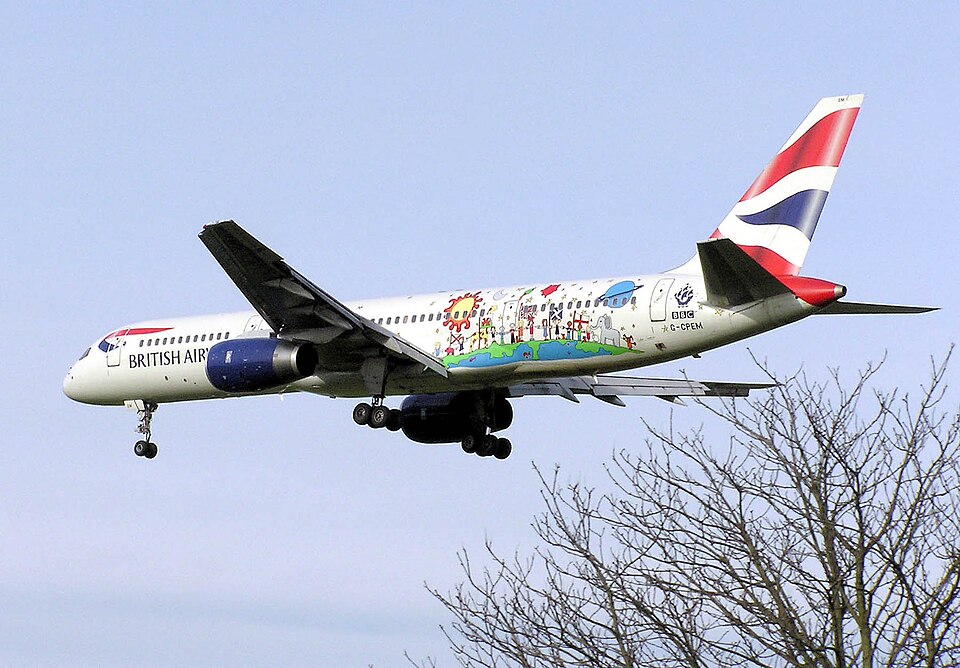
The Boeing 757-236, registration G-CPEM, operated by British Airways as flight BAW478, departed London Heathrow Airport for Barcelona on Sunday, 2 August 2009. Shortly before descent, a status message "STANDBY INVERTER" appeared on the EICAS. The crew checked the breaker panel and contacted technical personnel in Barcelona. A slight odd smell was noticed in the cabin and cockpit, which grew in intensity. At 09:36, ATC cleared the crew for an ILS approach to runway 25R. The acrid odor became stronger, and cabin crew reported smoke in the passenger cabin. Smoke was also visible in the cockpit, appearing to emerge from the left of the captain's seat. At 09:39, the crew declared an emergency due to smoke after deploying oxygen masks. The aircraft was at 4,500 ft descending, 15 NM northeast of Barcelona Airport. The copilot was flying; the captain handled communications. Several EICAS messages appeared, including YAW DAMPER and SPOILERS; only SPOILERS did not clear. The captain performed a manual landing, aware that the smoke was caused by an electrical problem. The aircraft landed on runway 25R at 09:44. The captain ordered evacuation after smoke persisted. Firefighting services aided evacuation.
Injuries to Persons
The 183 persons onboard (7 crew, 176 passengers) evacuated using seven of eight slides. Eight passengers received medical attention: three for anxiety attacks, two for contusions, two for back pain, and one for a twisted ankle who was taken to a hospital and discharged later.
Aircraft Damage
Damage was limited to the static inverter in the forward avionics compartment under the cockpit floor. Its outer housing showed discoloration by fire and emitted an acrid odor. Internal examination revealed fire in some components, including overheating of a carbon composition resistor (R170). The fire did not spread to other equipment.
Additional Information
The static inverter is a standby electrical component that transforms 28V DC to 115V AC. It operates under load in the absence of left main bus power or during CAT III autoland. The STBY INVERTER message appears when voltage is below 106V DC or above 124V DC. The EICAS LAND 2 message indicated operability of two autopilot computers. The SPOILERS message indicated inoperability of a spoiler pair due to standby bus supply issues. The YAW DAMPER message indicated a fault in one control module. The incident occurred in daytime under CAVOK conditions. The aircraft was equipped with a CVR and FDR; the CVR was overwritten. FDR data showed the aircraft's trajectory and landing at 130 kt at 09:44. The evacuation was recorded by airport surveillance cameras; door 2R did not open fully initially. The airport emergency plan was activated, and passengers were taken to terminal gates. The runway was closed until 10:55. The aircraft was towed to stand 65.