History of the Flight
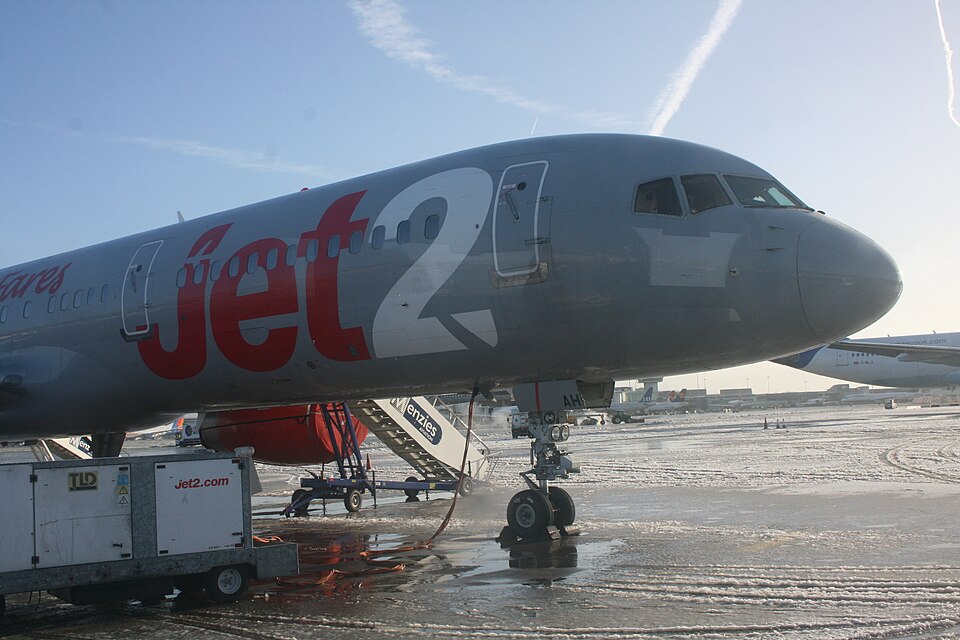
On Tuesday, 7 August 2012, a Boeing 757-21B aircraft, registration G-LSAH, operated by Jet2.com, was performing flight LS224 from Tenerife South Airport (TFS) to Leeds Bradford Airport in the United Kingdom. The aircraft had arrived at TFS at 14:02 local time, after a previous flight in the opposite direction. During the stopover, maintenance personnel discovered that the drain valve for the aft bathrooms had detached from its housing on the service panel and was hanging by elastic sealant. The valve was removed, and the task was recorded in the maintenance log. The aft bathrooms were rendered inoperable, and the aircraft was returned to service. The aircraft departed TFS at 15:15 with 7 crew and 222 passengers.
Climb and Pressurization Warning
About 25 nautical miles northeast of Tenerife, while the aircraft was climbing through flight level 230 en route to a cruise altitude of FL 360, the crew received an EICAS "CABIN ALT" warning, indicating a pressurization issue. The cockpit altimeter displayed between 13,500 and 15,000 feet, with a climb rate of approximately 1,000 feet per minute. The crew initiated the depressurization procedure, donned oxygen masks, and executed an emergency descent to 10,000 feet AMSL. The passenger oxygen masks automatically deployed, though some failed to drop, requiring flight attendant intervention.
Emergency Descent and Diversion
After reaching a safe altitude, the crew headed to waypoint BAMEL, where they circled to burn fuel to reduce the aircraft's weight to the maximum authorized landing weight of 89,811 kg. The aircraft lacked a fuel dump system. During this time, the crew declared PAN PAN initially and later MAYDAY. They coordinated with air traffic control and the airline's handling agent to prepare for the return landing. The emergency descent and diversion were conducted uneventfully, with the aircraft landing at Tenerife South Airport at 16:27 local time.
Injuries and Damage
There were no injuries to the 7 crew or 222 passengers. The aircraft sustained no additional damage beyond the minor issues reported prior to departure.
Personnel and Aircraft Information
The captain was 33 years old with 5,110 total flight hours, including 3,255 on type. The first officer was 40 years old with 3,331 total hours, 233 on type. The maintenance technician who handled the drain valve issue held a valid EASA Part 66 license with B1 category for the Boeing 757-200/300. The aircraft, manufactured in 1987, had a valid airworthiness certificate and had passed all scheduled inspections.