Factual Information
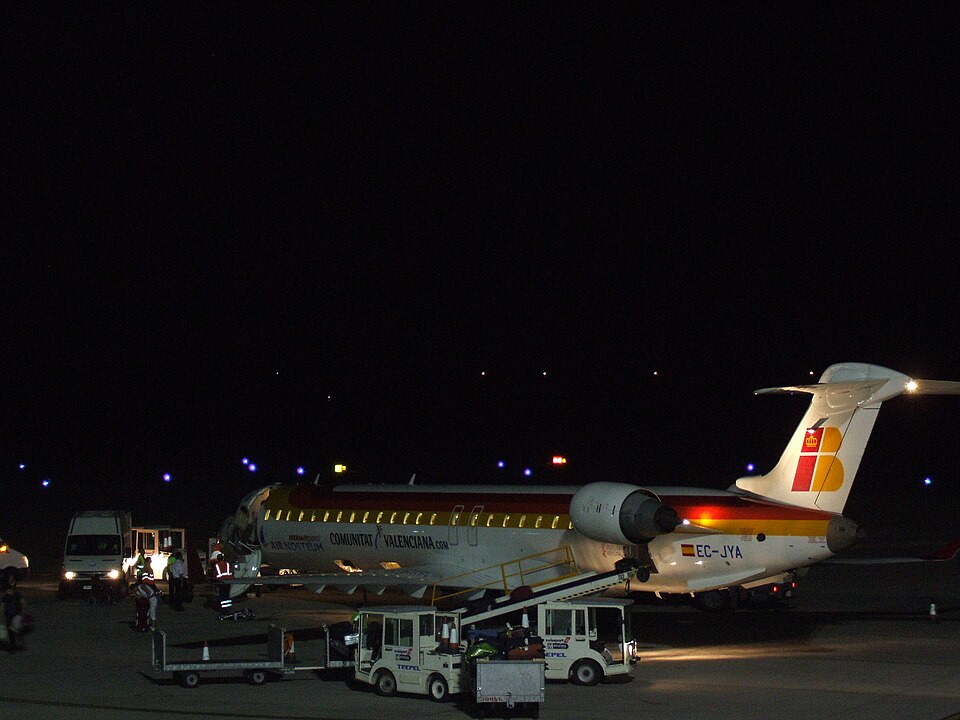
The incident occurred on 25 October 2013 at San Sebastian Airport (LESO). The aircraft was a Bombardier CRJ900 (CL-600-2D24), registration EC-JYA, operated by Air Nostrum. It was performing a scheduled domestic passenger flight from Madrid-Barajas Airport (LEMD). Onboard were 4 flight crew (2 as extra crew), 2 flight attendants, and 65 passengers. No injuries were reported.
After receiving weather information from the control tower, the crew decided to conduct a visual approach to runway 04. During the landing, the crew perceived a harder touchdown than usual. They performed a more thorough walkaround inspection of the main landing gear, finding no anomalies, and continued the stopover before returning to Madrid. Upon arrival, maintenance personnel conducted an exhaustive inspection and detected damage to the landing gear, which required grounding the aircraft. A specific post-hard-landing inspection was carried out by both maintenance and the manufacturer, leading to replacement of gear components.
Analysis
The characteristics of the airport and the aircraft were analyzed, along with the airline's special procedures for operating at San Sebastian. Data from flight recorders and other sources were examined.
Conclusions
The approach maneuver was not stabilized and exhibited a high rate of descent in the final segment, causing the aircraft to make a hard landing.