History of the Flight
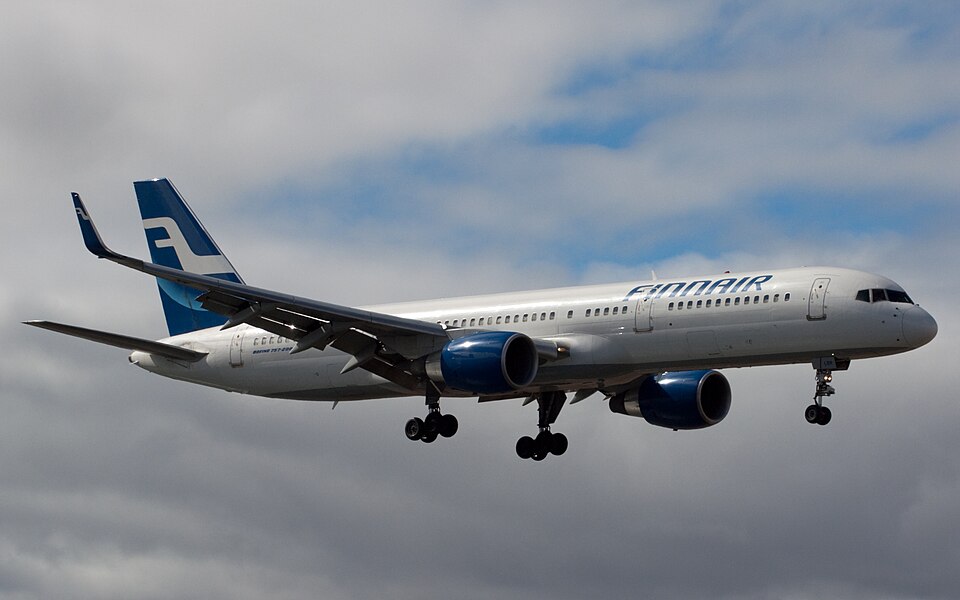
On 20 November 2011, at 12:50 local time, a Boeing 757 aircraft, registration OH-LBR, operating as Finnair flight FIN1601 from Helsinki Airport to Tenerife South/Reina Sofia Airport, was flying at flight level 390. Simultaneously, a Boeing 757 aircraft, registration G-TCBA, operating as Thomas Cook Airlines flight TCX13CS from Manchester Airport to the same destination, was at flight level 370. Both aircraft were on the ORTIS3G standard arrival and in radar contact with ACC Canaries, Sector NWW.
At 12:48:10, after a controller relief, the crew of TCX13CS requested a descent. The controller instructed them to stand by. Ten seconds later, the controller cleared FIN1601 to proceed directly to point ODULA and descend to flight level 250.
At that moment, the radar label for TCX13CS disappeared and was replaced by two labels for transponder code 3341, one at flight level 405 and another at flight level 370. The label for FIN1601 showed flight level 390. Over a minute later, the controller instructed TCX13CS to descend to flight level 390, but the crew replied they were already at flight level 370. The controller acknowledged and instructed them to stand by, then directed TCX13CS to turn 30° to the right.
Immediately after, the crew of FIN1601 asked the controller to confirm their clearance to descend to flight level 250 and reported receiving a TCAS advisory. Seconds later, TCX13CS reported the conflict had cleared. During the incident, the two aircraft violated the minimum radar separation distance prescribed for the area.
Personnel Information
The captain of FIN1601, aged 53, held a valid ATPL with a B757 rating and a class 1 medical certificate. He had 14,601 total flight hours, with 6,262 on type. The first officer, aged 34, also held a valid ATPL and medical certificate, with 6,783 total hours and 3,330 on type.
The captain of TCX13CS, aged 57, held a valid ATPL with a B757 rating and a class 1 medical certificate, with 16,900 total hours and 9,900 on type. The first officer, aged 35, had 7,300 total hours and 6,200 on type.
The NWW sector controller held a valid license and medical certificate, with an Area Control/Area Radar Control rating valid since 8 March 2011.
Aircraft Information
Aircraft OH-LBR was a Boeing B757-2Q8 (serial number 28167) with a maximum takeoff weight of 115,893 kg, powered by two Pratt & Whitney PW 2040 engines. Aircraft G-TCBA was a Boeing B757-28A (serial number 28203) with a maximum takeoff weight of 104,326 kg, powered by two Rolls Royce RB211-535E4-37 engines. Both had valid certificates and were equipped with Traffic Collision Avoidance Systems (TCAS II).
Communications
The following communications were recorded:
- 12:34:18: FIN1601 contacted Sector NW, reporting level 390.
- 12:35:20: TCX13CS contacted Sector NW, reporting level 370.
- 12:48:10: TCX13CS requested descent; controller replied to stand by.
- 12:48:20: Controller instructed FIN1601 to fly direct ODULA and descend to FL250.
- 12:49:32: Controller told TCX13CS to descend to FL390; crew replied they were at FL370.
- 12:49:49: FIN1601 asked for confirmation of clearance and reported TCAS RA.
- 12:50:17: TCX13CS reported conflict clear.
- 12:50:46: Controller instructed TCX13CS to turn right 30°.
Crew Statements
The crew of FIN1601 stated that while descending over point BRICK at flight level 370, they received TCAS advisories. They disengaged the autopilot and increased the descent rate, then received a "climb" resolution advisory followed immediately by "maintain vertical speed". They had the traffic in sight after the advisories.
The crew of TCX13CS stated that after the controller cleared FIN1601 to descend, it was immediately obvious the aircraft above them was descending. They received a "traffic traffic" advisory, then a "descend descend" advisory, and then a "climb, climb now" advisory. The pilot flying followed TCAS procedures until receiving a "clear of conflict" message.
Additional Information
The controller stated that FIN1601 requested descent 20 NM before point BRICK. At that time, the radar label for TCX13CS was separated, showing flight level 400 in Mode C, which led him to clear FIN1601 to descend. When the label correlated again, FIN1601 was at flight level 370, and separation was lost.
A Eurocontrol report using the InCAS tool (version 2.9) analyzed radar data and found the aircraft were on slightly divergent flight paths. TCAS activated when the aircraft entered the protective envelope (1.3 NM and 700 ft at that altitude). FIN1601, descending at 3,300 ft/min, first received an "Adjust vertical speed, adjust" resolution advisory specifying 0 ft/min, followed by a "Climb climb" advisory one second later. TCX13CS received a "Traffic traffic" alert.