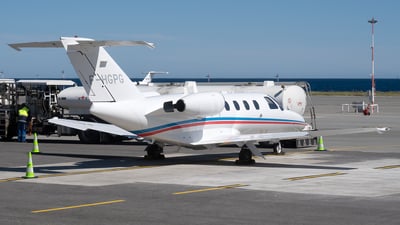
Erroneous Altimeter Data Leads to Near-Collision of Two Aircraft

Casualties unknown • en route, FR

A technical failure in the air data system of a Cessna Citation 525 CJ caused the aircraft to fly at an incorrect altitude, resulting in a loss of separation with an Embraer 170.

What happened

On 12 January 2022, a Cessna 525 CJ, registered F-HGPG and operated by Valljet, was performing a commercial flight from Paris-Le Bourget to Geneva. During the climb, the crew experienced sudden variations in the aircraft's nose-up attitude and observed erratic airspeed readings on the system 1 indicator. While the crew continued the climb using vertical speed mode, they eventually noticed a discrepancy between the two onboard altimeters.

To verify their actual altitude, the crew consulted the air traffic controller, who used the aircraft's transponder data to confirm the flight level. However, this cross-check failed to reveal that the system 1 altimeter was providing erroneous information. Consequently, the aircraft climbed to its assigned level based on a false altitude reading.

While en route, the crew notified the controller of the altimeter fault. The controller then alerted the crew to converging traffic, an Embraer 170, registered F-HBXG, operated by HOP!. Although the controller believed the Embraer was 1,000 feet above the Cessna, the actual separation had dropped to approximately 665 feet and 1.5 nautical miles. Because the Cessna's transponder was transmitting incorrect data, neither the onboard collision avoidance systems nor the ground-based monitoring tools triggered any warnings.

The investigation

The BEA examined the air data system of the F-HGPG, including the Pitot tubes and altimeters. The investigation revealed that the air data system 1 fault had previously occurred on this specific aircraft three times between 2017 and 2021. Investigators also reviewed the procedures used by the North ACC controller and the information provided by the National Air Operations Centre (CNOA). The investigation found that the CNOA had transmitted an incorrect altimeter setting to the controller, which further complicated the altitude verification process.

Findings

  • The primary cause of the incident was a fault in the air data system 1 of the Cessna 525 CJ, which led to incorrect altitude indications.
  • The crew's attempt to verify their altitude via the controller was unsuccessful because the transponder was transmitting the erroneous data from the faulty system.
  • The collision avoidance systems (ACAS and ground-based STCA/MSAW) failed to activate because they were processing the incorrect altitude data provided by the aircraft.
  • The CNOA provided an incorrect altimeter setting during the altitude cross-check, which hindered the controller's ability to identify the discrepancy.
  • The investigation noted that the operator's practice of requiring management validation for reporting technical faults in the technical logbook could impact the timely recording of such issues.

Probable cause

A malfunction in the air data system of the Cessna Citation 525 CJ caused erroneous altitude and airspeed indications, which went undetected during a controller cross-check, leading to a loss of vertical separation with another aircraft.

All Cessna 525 accidents →

Frequently asked questions

What happened in the 2022-01-12 Cessna 525 accident near en route, FR?

A technical failure in the air data system of a Cessna Citation 525 CJ caused the aircraft to fly at an incorrect altitude, resulting in a loss of separation with an Embraer 170.

What aircraft was involved and where did it happen?

The accident on 2022-01-12 involved a Cessna 525, registration F-HGPG, operated by Valljet, at en route, FR.

What was the probable cause of the accident?

A malfunction in the air data system of the Cessna Citation 525 CJ caused erroneous altitude and airspeed indications, which went undetected during a controller cross-check, leading to a loss of vertical separation with another aircraft.

Loading the flight search…