Synopsis
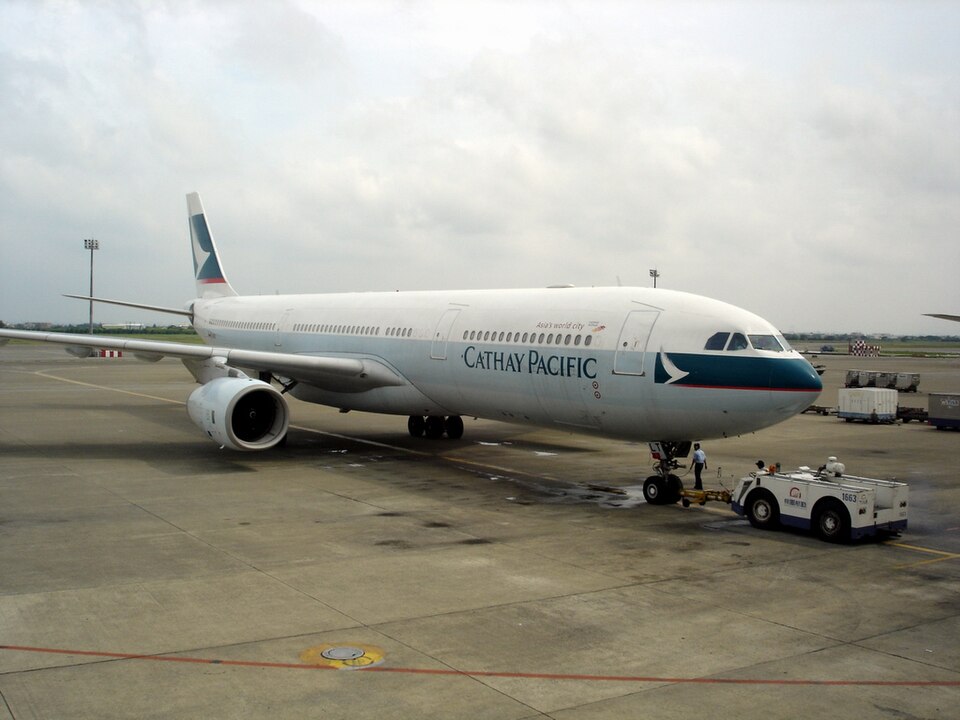
On 24 January 2020 at 1645 hours, a Hong Kong Dragon Airlines Limited (Cathay Dragon) Airbus A330-343, registration B-HLT, was being pushed back from Parking Bay N66 at Hong Kong International Airport (HKIA) onto Taxilane B7 for a departure to Kaohsiung. During the pushback, the flight crew started both engines in sequence.
After the aircraft was aligned with the centerline of Taxilane B7 abeam Parking Bay N64, the headset man and the wing walker disconnected the towbar without confirming that the parking brake light was illuminated and without placing a chock in front of the nose landing gear (NLG) wheels. With both engines at idle power, the aircraft moved forward slowly and collided with the left-hand side of the tractor, causing damage to the NLG.
Sequence of Events
The ground handling crew consisted of an Aircraft Maintenance Mechanic serving as crew leader and headset man, an Aircraft Facility Handler as wing walker, and an Aircraft Tractor Operator as tractor driver. The headset man communicated with the flight crew via a wireless headset setup.
According to HAECO's Standard Operating Procedure (SOP), the tractor driver was to prepare two chocks in the tractor before pushback, but this was not done. The wing walker noticed the absence of chocks and attempted to obtain a spare chock from the vicinity but was unsuccessful. He reported this to the headset man, who gave no instructions. Rubber chocks supplied by AAHK were available in the aircraft bay, but neither the headset man nor the wing walker considered them as alternatives to HAECO's chocks. The pushback commenced without any chock.
During pushback, the flight crew started both engines with the headset man's acknowledgement and set them at idle power per operator procedures. When the aircraft aligned with Taxilane B7 centerline abeam Parking Bay N64, the headset man notified the flight crew to set the parking brake. The flight crew did not receive this message, and the parking brake was not set, as confirmed by flight crew statements and cockpit voice recorder data. The headset man did not verify with the flight crew whether the brake was set. Without checking the parking brake light or placing a chock, the wing walker and headset man disconnected the towbar.
With both engines at idle and parking brake not set, the aircraft moved forward. The towbar end at the tractor side was fully disconnected, but the NLG-side end remained entangled despite an unlatched locking mechanism. As the aircraft moved, both ground crew escaped the moving aircraft. The headset man attempted to inform the flight crew to set the parking brake but received no response. He disconnected the wireless adapter and connected his headset directly to the NLG External Power Control Panel. The entangled towbar separated from the NLG and swayed to the forward left side. The NLG then collided with the left-hand side of the tractor before the flight crew could stop the aircraft. The NLG was damaged. The captain shut down both engines after ground crew confirmed damage, and all 269 passengers and 13 crew disembarked via mobile steps. No injuries occurred.
Conclusions
The investigation identified the cause of the incident as the headset man and wing walker disconnecting the towbar without confirming that the parking brake light was ON and a chock was placed in front of the NLG wheels. A contributing factor was that the wing walker and headset man did not follow HAECO's Standard Operating Procedure.
Safety Recommendations
Four safety recommendations were issued as a result of the investigation.