Casualties unknown

2024-02-27: (JU-1088) — MN

MN

On February 27, 2024, an aircraft (registration JU-1088) was involved in an aviation accident near MN. Investigators recorded the probable cause as: The incident was likely caused by a flight crew error during the adjustment of automatic pressurization settings during a climb, which led to a brief cabin altitude excursion. This summary draws on records from the Aviation Accident Investigation Bureau of Mongolia (AAIB).

Sourcesthe Aviation Accident Investigation Bureau of Mongolia (AAIB)Primary reportUpdated 1785081174Data APIEditorial standards
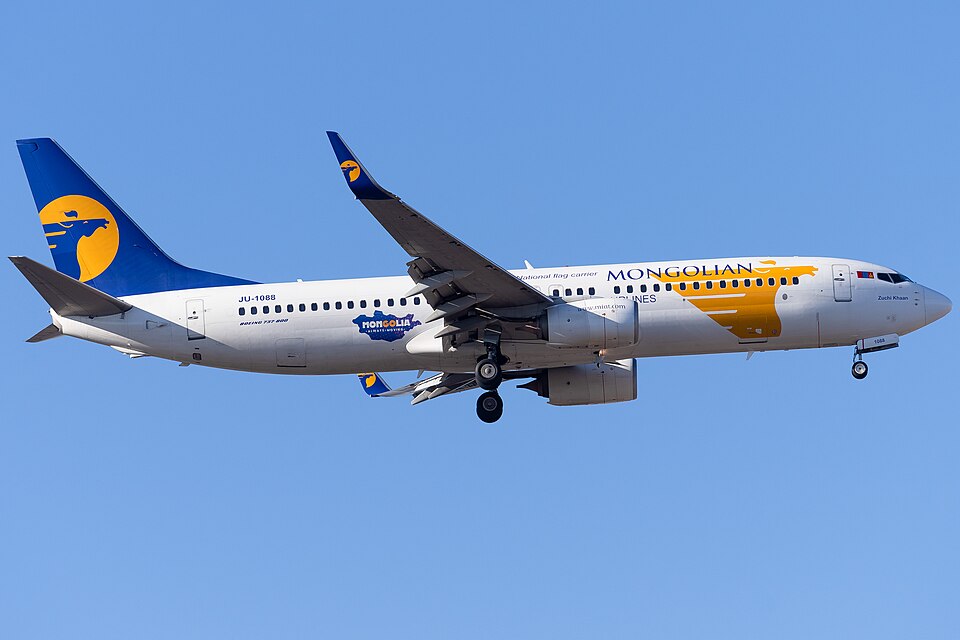
Aircraft registered JU-1088
Aircraft registered JU-1088. Photo: N509FZ / CC BY-SA 4.0, via Wikimedia Commons

A B737-800 aircraft experienced a cabin altitude warning at 34,835ft, leading to an emergency descent and the use of oxygen masks for crew and passengers.

What happened

On February 27, 2024, a B737-800, registration JU-1088, was operating a flight from Hong Kong to Ulaanbaatar. After climbing to a cruise altitude of 33,100ft and maintaining it for approximately 45 minutes, the aircraft began a further climb. At 34,835ft, the "Cabin Altitude Warning Horn" activated.

Flight attendants reported hearing a loud whistling sound near the right-hand door and noted physical symptoms such as ear pain and pressure among the crew and several passengers. One passenger required the use of an oxygen cylinder due to physical distress. The crew also noted signs of fogging within the cabin.

Following the warning, the flight crew initiated a descent. The descent to 8,000ft was performed in three separate stages over an 18-minute period. The aircraft eventually landed at Beijing Capital International Airport (PEK) at 08:04 UTC. There were no injuries to the 10 crew members or 126 passengers, and no damage was sustained by the aircraft.

The investigation

The investigation examined the flight data, cockpit voice recorder, and digital cabin pressure controller (DCPC) non-volatile memory. While the investigation could not access all necessary recordings to determine the exact root cause, flight data analysis revealed that the aircraft's pressurization control system had functioned normally throughout the flight.

The investigation also reviewed the flight crew's performance, specifically their adherence to non-normal checklists and their management of the pressurization mode selector during the climb.

Findings

  • The cabin altitude warning was triggered by a brief excursion where the cabin altitude exceeded 10,000ft.
  • The primary cause was likely human error, specifically an error made by the flight crew while adjusting altitude settings in the automatic pressurization mode during the climb.
  • The flight crew failed to follow the full sequence of the non-normal checklist, including failing to verify if a cabin altitude exceedance had actually occurred and failing to check the manual/alternate mode settings.
  • The crew's response to the warning was delayed, taking 1 minute and 40 seconds to stabilize the situation.
  • The flight crew's theoretical knowledge, practical skills, and training regarding the aircraft's pressurization and ventilation systems were found to be insufficient for handling such emergencies.

Safety action

  • A recommendation was issued to the airline to conduct theoretical training on cabin pressure systems for all flight personnel and to include these systems in simulator training programs.
  • A recommendation was issued to ensure that the selection, training, and preparation of pilots meeting ATPL requirements are strictly verified.
  • A recommendation was issued regarding the preservation and protection of all flight recordings to ensure they are available for future investigations.

Probable cause

The incident was likely caused by a flight crew error during the adjustment of automatic pressurization settings during a climb, which led to a brief cabin altitude excursion. This was compounded by the crew's failure to properly execute non-normal checklists and insufficient proficiency in managing the aircraft's pressurization systems.