Factual Information
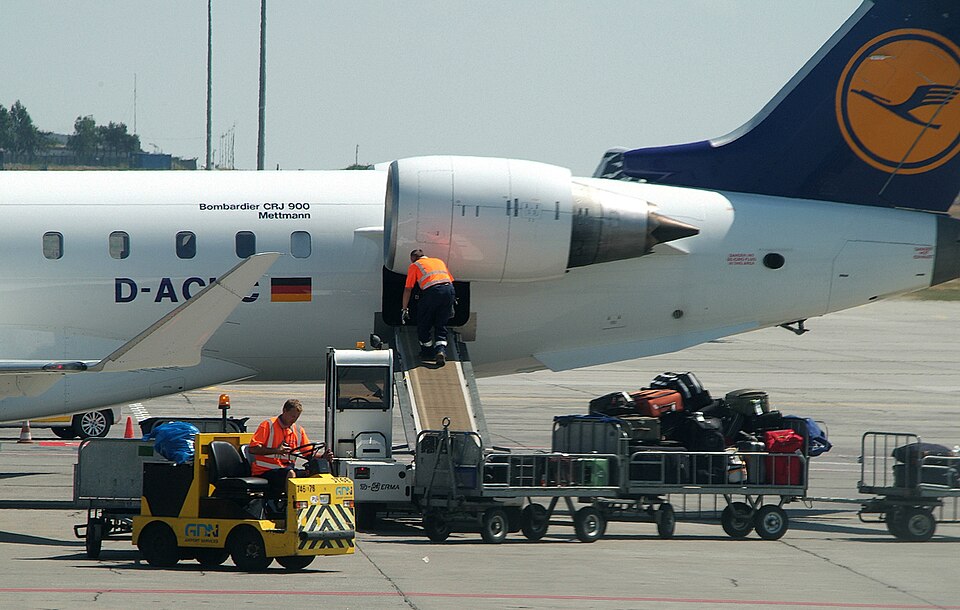
On 11 June 2012, a serious incident occurred in the Budapest FIR near the BUG VOR. The aircraft involved were a Bombardier CRJ900 (registration D-ACKC) operated by Lufthansa Cityline GmbH as flight DLH9949, and an Airbus A320 (registration OE-LEU) operated by Niki Luftfahrt GmbH as flight NLY2803.
History of Flight
Flight DLH9949 was a technical transfer flight without passengers from Timisoara (LRTR) to Munich (EDDM). The aircraft had an inoperative Traffic Alert and Collision Avoidance System (TCAS) due to a previous lightning strike. The flight crew consisted of two pilots who had rested for over 24 hours before the flight.
At 13:47 UTC, DLH9949 contacted the East Low (EL) sector of Budapest ATC while climbing through FL248, requesting further climb. The controller cleared the aircraft to FL320 at 13:49. Later, at 13:54:51, the EL controller approved an electronic coordination with the West Low (WL) sector, clearing DLH9949 to FL330. The pilots acknowledged and began climbing.
Flight NLY2803 was a scheduled passenger flight from Santorini (LGSR) to Vienna (LOWW). It entered Hungarian airspace at 13:50:37 at FL340. The EL controller instructed the flight toward BALUX, but the pilots declined due to weather and continued toward TORNO.
Both aircraft converged near the EL sector boundary. At 13:55:12, the EL controller advised NLY2803 of the traffic. At 13:56:00, DLH9949 crossed FL330 but continued climbing to FL360, violating the assigned altitude. The vertical separation minimum was breached when the horizontal separation was 2.6 NM. At the moment both aircraft were at FL340 (the A320's cleared altitude), the horizontal separation was 1.9 NM. When the required vertical separation was regained, the horizontal distance had reduced to 0.7 NM.
Aircraft Information
The CRJ900 (D-ACKC) had a faulty TCAS display, showing a "TCAS DISPLAY FAIL" message. No other faults were reported. The Airbus A320 (OE-LEU) was fully serviceable.
Personnel
The EL sector was staffed by two controllers: a radar controller and a planner-controller. They were handling 10 aircraft at the time, with a workload considered moderate to heavy due to thunderstorms. The incident occurred near the end of their shift.
Weather
The weather was daylight Visual Meteorological Conditions (VMC) among high Cumulonimbus clouds, which influenced aircraft routing.
ATC Communication
The EL controller cleared DLH9949 to FL330 via electronic coordination at 13:54:51. However, the pilots misunderstood and climbed to FL360. The controller did not detect the deviation immediately due to radar scale and workload. A Short Term Conflict Alert (STCA) activated, but no TCAS Resolution Advisory was issued from DLH9949 due to its inoperative TCAS.
Investigation
The Transportation Safety Bureau of Hungary (TSB) conducted the investigation. They examined radar recordings, radio communications, flight data, cockpit voice recorder, TCAS data, and conducted interviews. The investigation determined that the flight crew of DLH9949 climbed without clearance, leading to the loss of separation.
Safety Recommendations
The investigating committee proposed safety recommendations to prevent similar occurrences, though specific recommendations are not detailed in the report.
Probable Cause
The flight crew of DLH9949 climbed without clearance, resulting in a loss of separation.