Synopsis
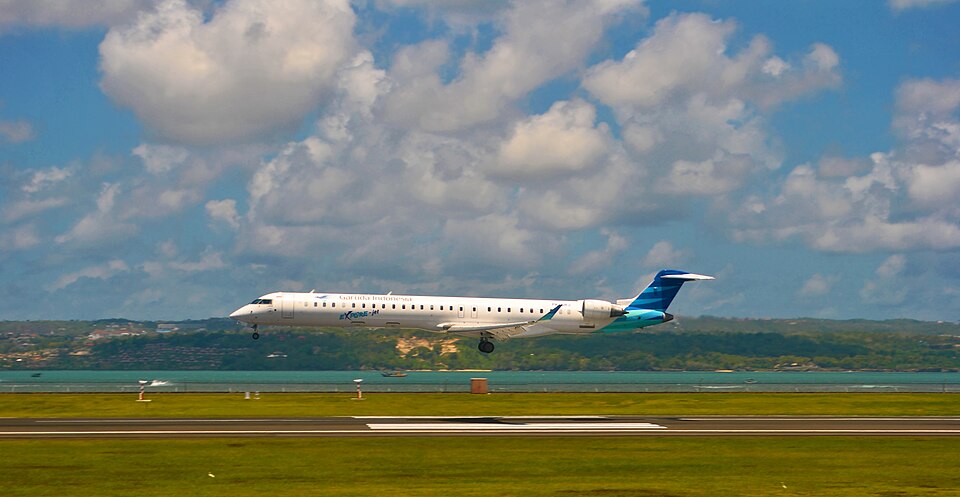
On 11 May 2018, an ATR 72-500 aircraft registered PK-WFW operated by Wings Air as flight WON1921 was on a scheduled passenger flight from Kupang to Tambolaka. On the same day, a Bombardier CRJ1000 aircraft registered PK-GRJ operated by Garuda Indonesia as flight GIA460 was on a scheduled passenger flight from Tambolaka to Kupang. The Pilot in Command of GIA460 acted as Pilot Flying, and the Second in Command acted as Pilot Monitoring. No one was injured and no damage occurred on either aircraft.
Factual Information
History of the Flight
The WON1921 pilot made initial contact with the Tambolaka Aeronautical Communication Officer (ACO) at 1429 LT, reporting position 56 Nm from Tambolaka at 14,500 feet. At 1433 LT, the GIA460 PM contacted the ACO, requesting engine start and clearance to 25,000 feet. At 1437 LT, the ACO informed WON1921 of GIA460 entering backtrack runway 10. WON1921 was instructed to descend to circuit altitude and join left downwind runway 10. During backtrack, the GIA460 PF advised the PM that WON1921 would join right downwind runway 10. At 1441 LT, GIA460 rolled for takeoff. After takeoff at about 600 feet, the PF turned left. Both aircraft experienced TCAS RA activations and followed the advisories until clear of conflict.
Personnel Information
The GIA460 pilot held appropriate licenses. The WON1921 pilot also held appropriate licenses. The ACO was qualified.
Aircraft Information
GIA460 was a Bombardier CRJ1000, registration PK-GRJ. WON1921 was an ATR 72-500, registration PK-WFW. No system malfunctions were reported.
Communications
Communication between pilots and ACO was normal without transmission problems.
Flight Recorders
Data from flight recorders were used to analyze the aircraft movements.
Organizational and Management Information
Air Traffic Service provider was AirNav Indonesia. Garuda Indonesia and Wings Air operated under their respective AOCs. The Indonesia Civil Aviation Authority (DGCA) oversees safety.
Analysis
The investigation analyzed the aircraft movements and flight information services. The contributing factor was the GIA460 pilot's justification based on available information of WON1921 that were not properly assessed and without proper crew coordination, resulting in GIA460 departing and following the common practice to turn left after departure.
Conclusions
Findings
Several findings were identified, including that the WON1921 pilot reported joining left downwind, the GIA460 pilot was aware of WON1921 but misinterpreted the join as right downwind, and the ACO did not correct the GIA460 pilot's assumption.
Contributing Factors
The investigation concluded the contributing factor was pilot justification based on available information of WON1921 that were not properly assessed and without proper crew coordination resulted in the GIA460 departed following the common practice to turn left after departure.
Safety Actions
The DGCA issued a safety bulletin. Garuda Indonesia issued internal safety notices. AirNav Indonesia implemented enhanced training for ACOs.
Safety Recommendations
AirNav Indonesia was recommended to improve coordination and communication procedures. Garuda Indonesia was recommended to review departure procedures and crew coordination training. Wings Air was recommended to ensure clear communication of intentions.