Casualties unknown

2017-02-01: Boeing 737-800 (PK-GNK) — Garuda Indonesia — Adisutjipto International Airport, Yogyakarta, ID

Adisutjipto International Airport, Yogyakarta, ID

On February 1, 2017, a Boeing 737-800 (registration PK-GNK) operated by Garuda Indonesia was involved in an aviation accident near Adisutjipto International Airport, Yogyakarta, ID. Investigators recorded the probable cause as: The aircraft veered off the runway during a wet landing, potentially exacerbated by unclear runway centerline markings and inconsistent aerodrome inspection schedules. This summary draws on records from the Indonesian National Transportation Safety Committee (KNKT); 8 related events involving the same aircraft type or operator are linked below.
Sourcesthe Indonesian National Transportation Safety Committee (KNKT)Primary reportUpdated 1785107694Data APIEditorial standards
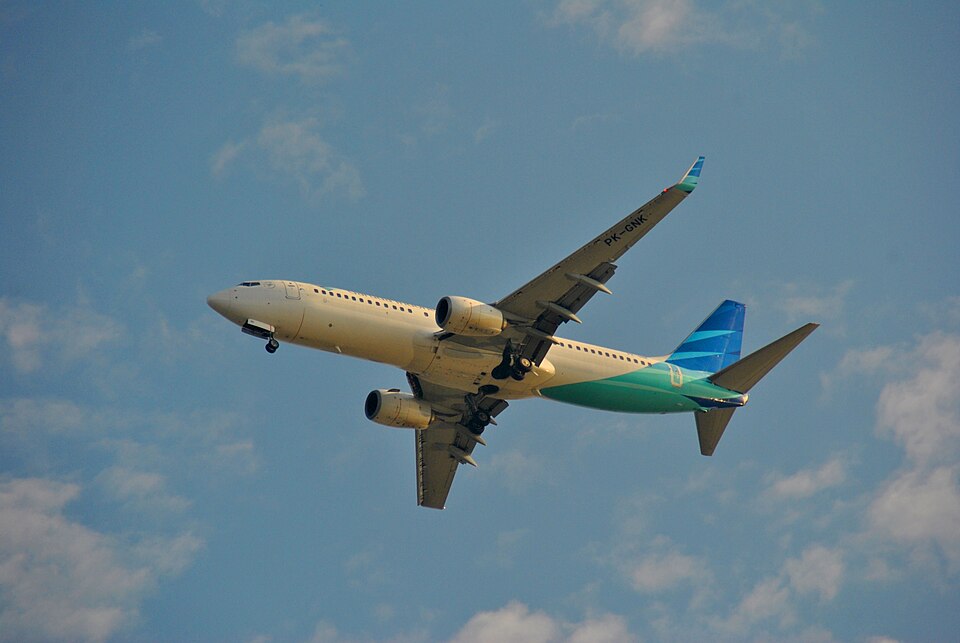
Aircraft registered PK-GNK
Aircraft registered PK-GNK. Photo: Sabung.hamster aka Everyone Sinks Starco aka BxHxTxCx / CC BY-SA 4.0, via Wikimedia Commons

A Garuda Indonesia Boeing 737-800 veered off the runway at Adisutjipto International Airport during a rainy landing, resulting in no injuries.

What happened

On 1 February 2017, a Boeing 737-800, registration PK-GNK, was operating a scheduled passenger service from Jakarta to Yogyakarta. The flight, operated by PT. Garuda Indonesia, was carrying 119 passengers and six crew members.

During the landing phase at Adisutjipto International Airport, the aircraft encountered light rain and wet runway conditions. After touching down on runway 09, the aircraft began to veer to the left while the crew was applying reverse thrust. The aircraft eventually came to a stop on the left shoulder of the runway, approximately 20 meters from the runway edge and 1,600 meters from the threshold. While the aircraft sustained no damage and there were no injuries, the incident required an emergency evacuation of all passengers.

The investigation

The KNKT examined the flight data recorder (FDR) and cockpit voice recorder (CVR) to reconstruct the landing roll. The investigation focused on the aircraft's technical status, the meteorological conditions, and the maintenance of the aerodrome. Investigators reviewed the aircraft's airworthiness, finding no technical abnormalities prior to the event. The investigation also scrutinized the airport's maintenance records, specifically regarding rubber deposit removal and runway friction testing, as well as the clarity of runway markings.

Findings

  • The aircraft was airworthy and no technical malfunctions were recorded.
  • The runway surface was wet due to light rain at the time of the incident.
  • FDR data indicated variations in wind speed and direction, as well as asymmetric braking pressures and rudder deflections during the landing roll.
  • Unclear runway centerline markings were identified in the touchdown zone of runway 09.
  • There was a discrepancy between the airport's Aerodrome Manual and Standard Operating Procedures regarding the frequency of daily runway inspections.
  • The last recorded runway friction test had been conducted several months prior to the event.

Safety action

Following the incident, Garuda Indonesia issued a notice to flight crews reminding them to maintain safety protocols during the rainy season. Additionally, an announcement was made to cabin crew regarding the implementation of evacuation procedures during aircraft incidents.

Probable cause

The aircraft veered off the runway during a wet landing, potentially exacerbated by unclear runway centerline markings and inconsistent aerodrome inspection schedules.