Accident Overview
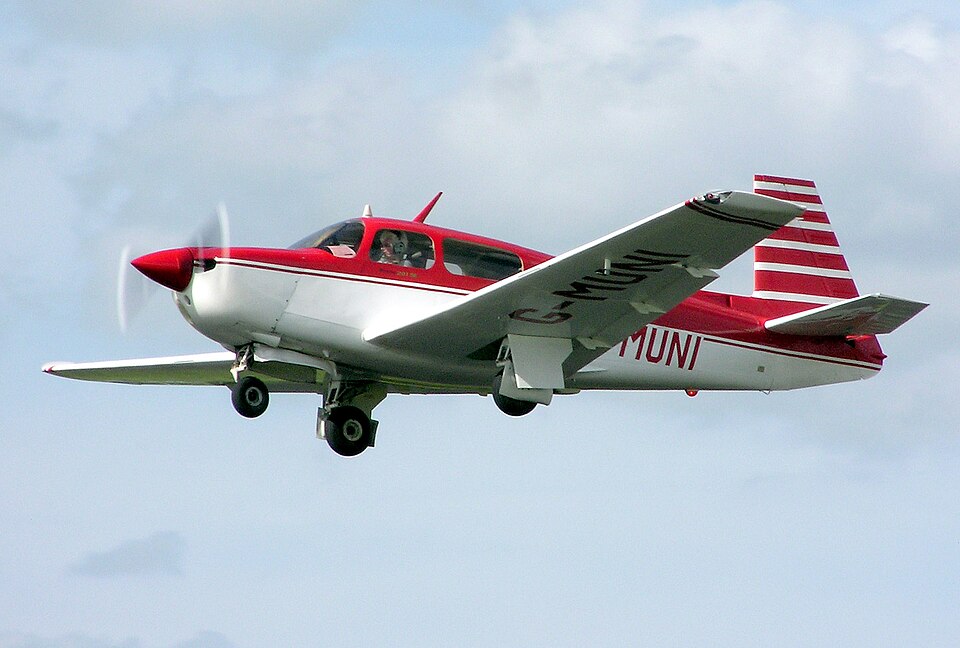
On 6 July 2002, a Mooney M20J (registration G-MUNI) was involved in an accident at Fairoaks, Surrey, during a training flight. The aircraft was being used for a Licence Proficiency Check. The owner, acting as the handling pilot, had completed external checks and was joined by the examiner, who was the legal commander. After engine start, the aircraft taxied to the holding point for Runway 24. Power checks revealed no anomalies, and the takeoff run commenced with normal acceleration and full engine power.
Engine Power Loss and Forced Landing
Shortly after takeoff, at approximately 100 to 150 feet above ground level, the engine experienced a sudden and severe power loss with no preceding symptoms such as rough running. The aircraft was trimmed for a glide and the handling pilot executed the appropriate engine-failure-after-takeoff procedures. The examiner transmitted a truncated Mayday call and directed the aircraft to the right of the runway extended centreline, avoiding a line of trees, towards a suitable field. The aircraft touched down in the corner of a field, passed through fences, and came to a stop. The cockpit area remained intact, and both pilots exited without injury. There was no fire. The aircraft sustained substantial damage to both wings, fuselage, and propeller.
Post-Accident Examination
The examiner called the Fairoaks tower via mobile phone. Airport fire services arrived in less than five minutes, followed by local emergency services. The aircraft was recovered to a hangar for inspection. Checks revealed that both fuel tanks were full of fuel. When the fuel line between the engine-driven fuel pump and the fuel injector was disconnected, a large quantity of water drained out.
The aircraft had been parked outdoors at Fairoaks for several months. On the accident day, 166 litres of Avgas 100LL were uplifted, and the aircraft had been refuelled to capacity. A period of very heavy rainfall occurred that day. The maintenance manual warns of possible rainwater entry through fuel filler caps. Examination of the filler caps found their seals and seatings satisfactory, with no leaks detected.
Fuel Drain System
The aircraft has fuel drains in each tank and the gascolator. The gascolator drain is operated by a pull ring under the front edge of the left front seat, which is not readily visible when the seat is not fully aft. The design makes it difficult to check without assistance. The owner stated he routinely checked the wing drains but checked the gascolator drain only every other flight, as he believed it unlikely to contain water if the wing drains were clear. He had rarely found water in the fuel system over his ownership since 1993.
Conclusion
The investigation identified water contamination in the fuel system as the cause of the power loss. The source of the water was not determined, but the aircraft had been exposed to heavy rain while parked outdoors. No mechanical issues were found with the filler caps.