What happened
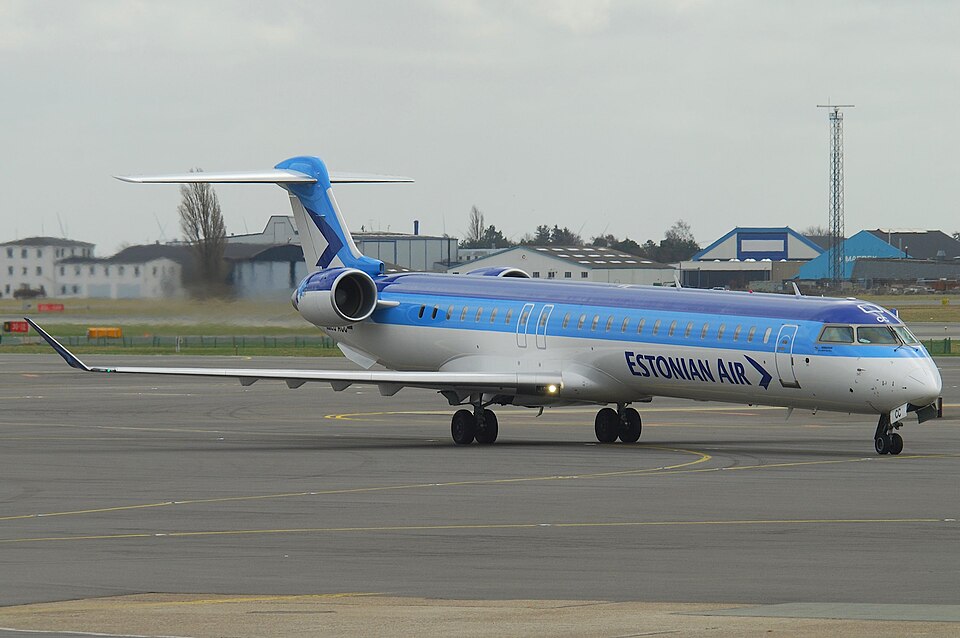
On 14 August 2014, at 15:41, a CRJ-900 with registration ES-ACC departed from Tallinn. Shortly after takeoff, the flight crew noted light vibrations and unusual noises within the cabin. During the flight, air traffic control informed the crew that multiple pieces of tyre debris had been discovered on the runway during a routine inspection. The crew decided to return to Tallinn. During a low-altitude flyby, the crew identified that the left main gear tyre had burst. The aircraft landed safely after consuming necessary fuel, with no injuries or further incidents reported.
The investigation
The Estonian Safety Investigation Bureau (OJK) classified the event as an incident and did not open a formal investigation. During the information-gathering process, the board confirmed that the crew held all necessary licenses and competencies, and the aircraft was airworthy and properly maintained. The crew's actions during the event were found to be in compliance with OM-B 2.5.5 and the Quick Reference Handbook (QRH) procedures.
The investigation examined the physical damage caused by the burst tyre, which included the deformation of the left aft fuselage fairing, partial damage to a rib on the left wing, and damage to several blades of the left engine fan. The board also reviewed the maintenance history of the tyre, noting it was an EASA-certified component that had been retreaded for the third time at a certified facility and installed by a certified maintenance organization. Pressure checks had been performed on 13 August 2014, one day prior to the event.
Findings
- The burst tyre fragments caused structural damage to the left engine fan blades, the left wing rib, and the aft fuselage fairing.
- A runway inspection revealed no foreign objects that could have caused the failure.
- The specific tyre involved had been retreaded three times.
- The same tyre position had experienced a burst 45 days earlier on 30 June 2014.
- The cause of the burst tyre could not be determined due to the condition of the failed component and the limitations of retreading technology analysis.
- Monitoring of the braking system and tyres was initiated following the discovery of a recurring issue at that specific wheel position; however, no abnormalities in the braking system were detected.