Ultralight Crash in Chonburi Kills Pilot Due to Wing Fabric Failure
An X-AIR HAWK ultralight crashed in Chonburi, Thailand, killing the pilot and injuring a passenger. The accident was caused by deteriorated wing fabric and…
On August 1, 2015, an iga ES-FCC Karksis (registration ES-FCC) was involved in an aviation accident near Karksi, EE. Investigators recorded the probable cause as: The accident was caused by pilot error. The pilot incorrectly assessed the runway length, landing point, friction coefficient, and aircraft speed during the braking distance calculation. This summary draws on records from the Estonian Safety Investigation Bureau (OJK).
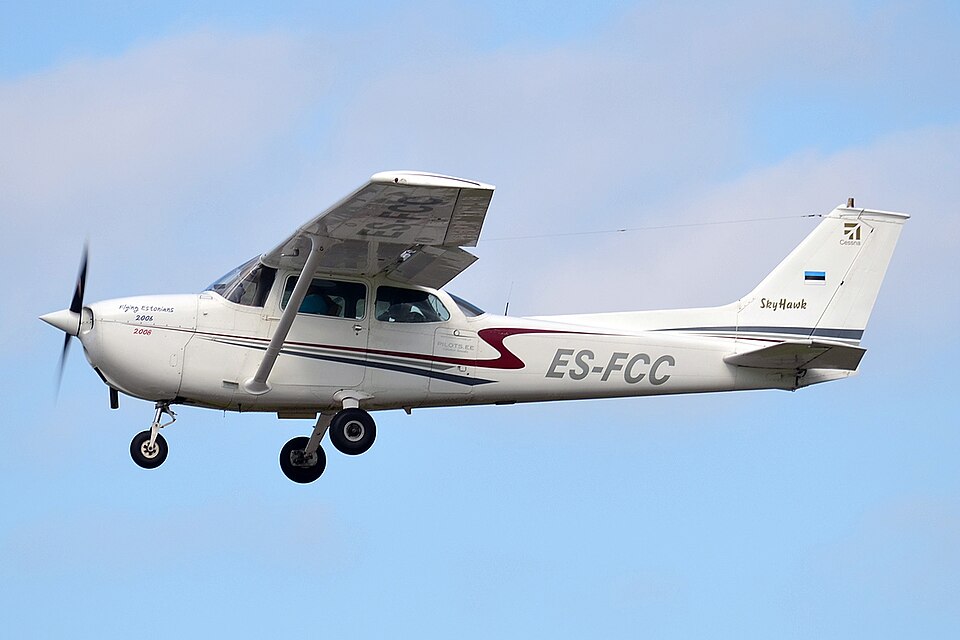
On August 1, 2015, a Cessna 172M (ES-FCC) operated by Tackmer Air OÜ overran runway 34 at Karksi Airfield (EEKI) in Estonia. The aircraft struck a fence and a tree, sustaining heavy damage, while the pilot and two passengers escaped uninjured.
The accident was caused by pilot error. The pilot incorrectly assessed the runway length, landing point, friction coefficient, and aircraft speed during the braking distance calculation. Additionally, the pilot did not use the aircraft's flaps to their maximum extent to reduce horizontal speed during landing. The combination of these factors resulted in the aircraft overrunning the runway, colliding with a tree, and sustaining damage. The Safety Investigation Center also identified the pilot's limited flight experience and insufficient preparation for landing calculations on short runways as significant contributing factors.
An X-AIR HAWK ultralight crashed in Chonburi, Thailand, killing the pilot and injuring a passenger. The accident was caused by deteriorated wing fabric and…
A Challenger II Special ultralight aircraft (U-B23) landed off-runway at Pai Airport, Mae Hong Son, on September 17, 2024, due to a gust of wind. No injuries…
The Polish aviation safety authority is investigating a serious incident involving an AT-3R100 aircraft that occurred on September 2, 2024. The investigation…
A SZD-48-3 glider suffered damage when its left wing struck a ground obstacle during a low final approach at EPWK on June 20, 2025. The pilot was uninjured.
A 39-year-old skydiver died after a hard landing near Leszno on May 1, 2026. The PKBWL preliminary report indicates the fatal impact resulted from a late,…
A student pilot crashed an SZD-50-3 Puchacz glider into the airfield fence during a solo training flight on June 6, 2026. The pilot was uninjured, but the…