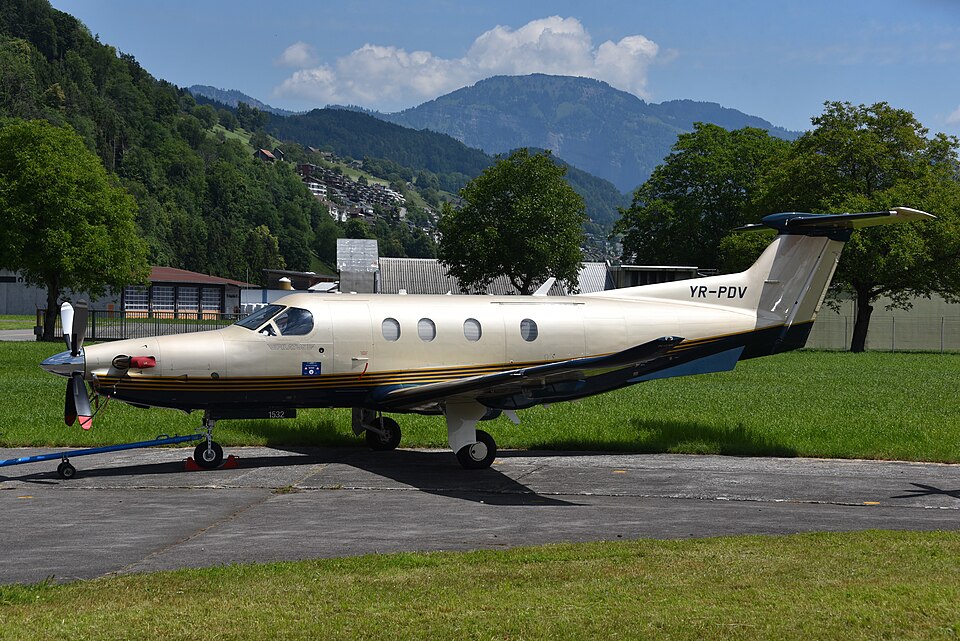
Accident Details
On an unspecified date, a single engine aircraft departed from Milan-Linate Airport runway 36 at 1304 local time, bound for Olbia with one pilot and seven passengers. Ten seconds after takeoff, the pilot engaged the autopilot and LNAV mode, but both disengaged approximately 1 minute and 40 seconds later. The aircraft did not follow the Standard Instrument Departure (SID) heading of 130 degrees after takeoff; instead, it continued turning to the west.
Milano Area Control Center instructed the pilot to turn left heading 120 degrees, but the aircraft turned right again, after which the altitude stabilized. At an altitude of 5,300 feet, the aircraft entered an uncontrolled descent and crashed in a vertical attitude onto an industrial building under construction, located about 1.8 km southwest of the runway 36 threshold. The aircraft disintegrated on impact, and all eight occupants were killed, including Romanian businessman Dan Petrescu. The building suffered severe damage, along with a few vehicles on the street. There were no injuries on the ground.
Probable Cause
According to the official investigation, the considerable destruction of the aircraft and the absence of data recorded by the LDR (Likely a reference to flight data recorder, but the source uses LDR) related to the accident did not allow for the identification of the cause with incontrovertible certainty. It was not possible to categorically exclude the occurrence of a failure that may have compromised the controllability of the aircraft; however, such a hypothesis appeared to be the least probable based on the evidence. The cause of the event is reasonably attributable to the pilot's loss of control of the aircraft, which occurred during the execution of a SID in daytime Instrument Meteorological Conditions (IMC), with the aircraft being manually piloted. It can be assumed that at the origin of the loss of control, there may have been a saturation of the pilot's cognitive processes, with consequent channeling of attention to the navigation system, which would have likely diverted the pilot's attention from the basic and manual conduct of the aircraft. It cannot be excluded that a non-catastrophic technical issue may have contributed to this task saturation. A recurring lack of training may have contributed to the failure to control the aircraft, as well as an inadequate handling of a possible non-catastrophic technical failure. Due to the lack of flight data, it was not possible to determine if the disengagement of the autopilot and LNAV mode was voluntary by the pilot or caused by a failure.