Background
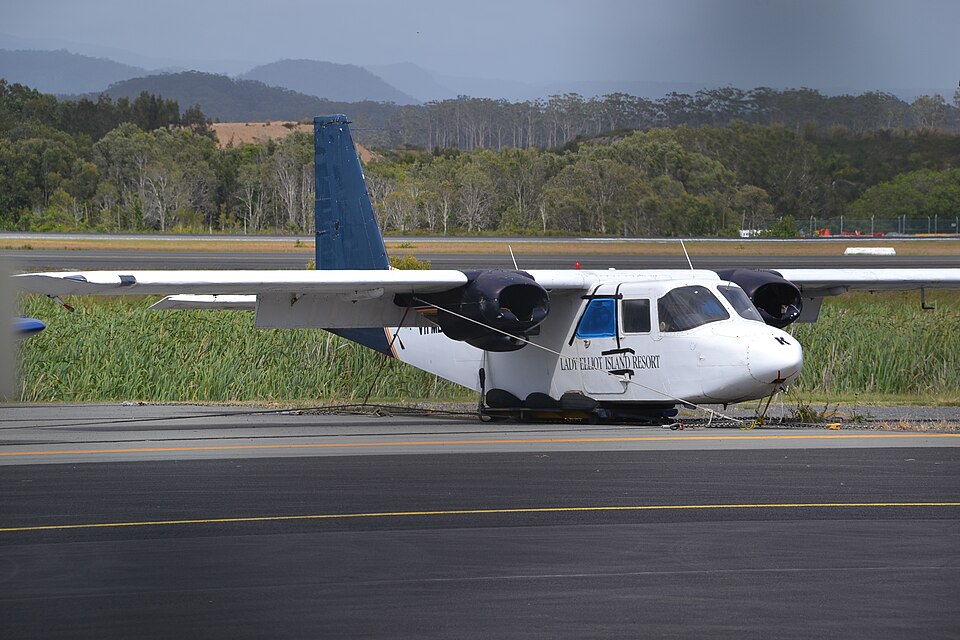
The aircraft was based at Moorabbin Airport. On the afternoon of 29 March 1978, it was refueled and underwent a pre-flight inspection. The pilot ferried it to Melbourne Airport just after midnight. There, the aircraft was loaded with newspapers and a small quantity of other freight. After checking loading documents and the freight, and performing a walk-around inspection, the pilot started the engines and established radio communication with air traffic control at 0139 hours.
Flight Sequence
At 0139 hours, the pilot received a taxi clearance and an airways clearance for departure from runway 34. Upon request, approval was granted to commence take-off from the taxiway "J" intersection, approximately 800 meters from the southern end of the runway. The pilot reported "ready" at 0143 hours and was immediately cleared for take-off. The aircraft became airborne. When it reached a height of 100 to 200 feet above the intersection of the two runways, the pilot advised, "got a fire - fire in the ah starboard engine and ah doing a low circuit request two seven". Air traffic control responded, "make visual approach runway two seven clear to land". This acknowledgement was the last communication received from the aircraft.
Accident and Investigation
As the aircraft passed over the northern end of runway 34, it commenced a turn to the right and gradually descended. It struck the ground in a right wing down attitude on a track of 070° magnetic. An intense fire broke out. The accident site was 1.8 kilometers to the north-east and 88 feet above the elevation of the northern end of runway 34. At the time, surface wind was 330°/9 knots, visibility 25 km in passing showers, with 3 oktas stratus cloud base 1800 feet and 6 oktas cumulus base 3500 feet. It is probable that below 1000 feet there was wind shear, downdrafts from passing showers, and intermittent moderate turbulence. The calculated gross weight of the aircraft was about 65 kilograms in excess of maximum take-off weight, with center of gravity within limits.
Findings
Examination of the wreckage revealed landing gear and flaps fully retracted; cowl flaps of both engines midway open; a considerable degree of nose left rudder trim selected; the right engine was closed down and the propeller feathered. Investigation established that, due to excessively lean mixture operation, a hole had burned through the piston rings and into the side of the No. 2 piston of the right engine. There was no evidence of fire within the engine, but the hole allowed pressurization of the crankcase cavity, ejection of the oil dipstick, and consequent venting of oil onto the exterior of the exhaust pipes. The engine had the capacity to continue producing substantial power for a limited period. The left engine's turbo-charger density controller was found incorrectly adjusted, limiting that engine to about 330 BHP instead of the normal 350 BHP.
Probable Cause
The official probable cause is stated as: "The probable cause of the accident was that, believing there was an internal fire in the right engine, the pilot closed the engine down in circumstances where the single-engine performance capability of the aircraft proved to be insufficient to sustain continued flight."