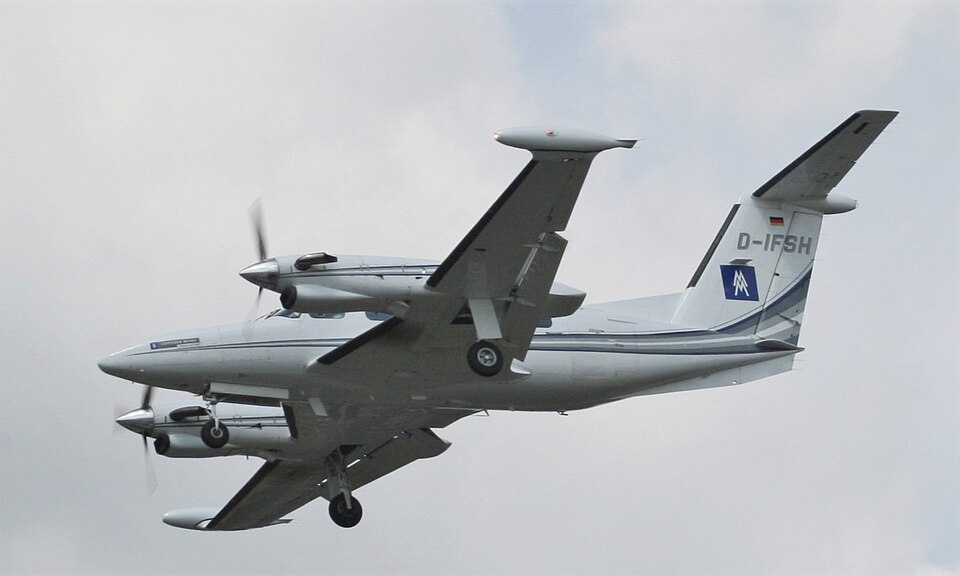
Flight and Crew
The flight, designated RUS1050, was a positioning flight from Leipzig/Halle Airport to Zurich-Kloten Airport. It was operated on behalf of FSH Luftfahrtunternehmen under contract to Cirrus Aviation. The two pilots were the only occupants.
Accident Sequence
On final approach to runway 14, the crew encountered poor visibility due to fog. The runway visual range (RVR) for runway 14 was estimated at 275 metres, below the minimum of 400 metres required for a CAT II approach. Despite this, the crew decided to continue the approach. They descended below the minimum descent altitude (MDA) until the aircraft struck the ground between runways 14 and 16. After rolling for several dozen metres, the undercarriage was lost and the aircraft came to rest in a frosty field.
Weather Conditions
At the time of the accident, vertical visibility was 300 feet, horizontal visibility was 200 metres with freezing fog. The outside air temperature was -3°C and the dew point was -4°C.
Damage and Injuries
The aircraft sustained damage beyond repair. Both pilots escaped with minor injuries.
Investigation Findings
The official investigation determined that the probable cause was the crew's decision to continue the approach below the decision height during an ILS approach without sufficient visual references, leading to the aircraft striking the ground. Contributing factors included the aircraft not being equipped or approved for the weather conditions, the crew not being trained for such approaches, failure to comply with standard operating procedures (SOPs) and task assignment, unfamiliarity with procedural requirements, and insufficient knowledge checks by the operator.