5 fatalities

2006-07-16: Piper PA-46 (Malibu/Meridian/Mirage/Matrix/M-Class) (D-EJMV) — MediAir Flugdienst-Ambulanzflüge — Marina di Campo (Elbe Island), Italy

Marina di Campo (Elbe Island), ItalyTakeoff (climb)

On July 16, 2006, a Piper PA-46 (Malibu/Meridian/Mirage/Matrix/M-Class) (registration D-EJMV) operated by MediAir Flugdienst-Ambulanzflüge was involved in an aviation accident near Marina di Campo (Elbe Island), Italy during takeoff. 5 people were killed. Investigators recorded the probable cause as: The accident was caused by an aerodynamic stall at a low altitude during the initial climb, potentially triggered by an unidentifiable mechanical issue. This summary draws on records from the Bureau of Aircraft Accidents Archives (B3A); 8 related events involving the same aircraft type or operator are linked below.

Sourcesthe Bureau of Aircraft Accidents Archives (B3A)Primary reportUpdated 1781198740Data APIEditorial standards
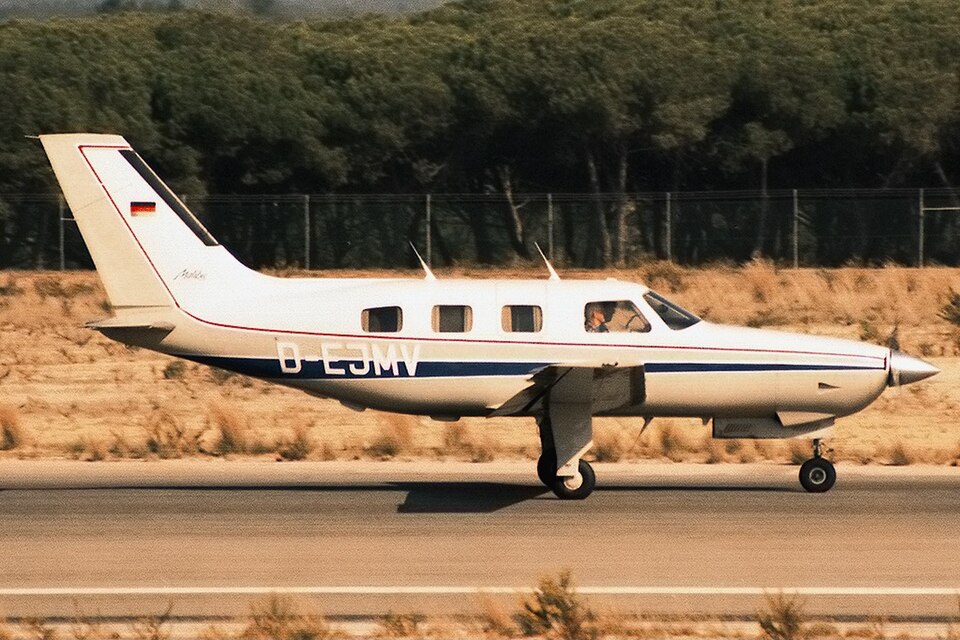
Aircraft registered D-EJMV
Aircraft registered D-EJMV. Photo: Pedro Aragão / CC BY-SA 3.0, via Wikimedia Commons

A private flight departing for Vilshofen crashed in a vineyard near Marina di Campo Airport, resulting in three fatalities and several critical injuries.

What happened

On the evening of the incident, a single-engine aircraft was prepared for departure from runway 34 at Marina di Campo Airport. The flight was scheduled to travel to Vilshofen, Bavaria, with one pilot and four passengers on board. During the initial takeoff roll, air traffic control notified the pilot that smoke was visible emanating from the plane; however, no response was received from the cockpit, and the takeoff sequence proceeded.

Following liftoff under visual flight rules (VFR), the aircraft performed a right-hand turn followed by a left-hand turn. During this maneuver, the plane lost altitude and struck a vineyard situated approximately one kilometer north of the runway threshold. The impact resulted in three fatalities among the occupants. Two passengers sustained serious injuries during the crash. In the hours and days following the accident, the two survivors also succumbed to their injuries.

Findings

Investigations concluded that the aircraft experienced an aerodynamic stall at a low altitude during the initial climb phase. This loss of control was likely triggered by an unidentified technical malfunction. The pilot's attempt to maneuver back toward the airport failed because the proximity to the ground prevented any successful recovery from the stall.

Probable cause

The accident was caused by an aerodynamic stall at a low altitude during the initial climb, potentially triggered by an unidentifiable mechanical issue.