What happened
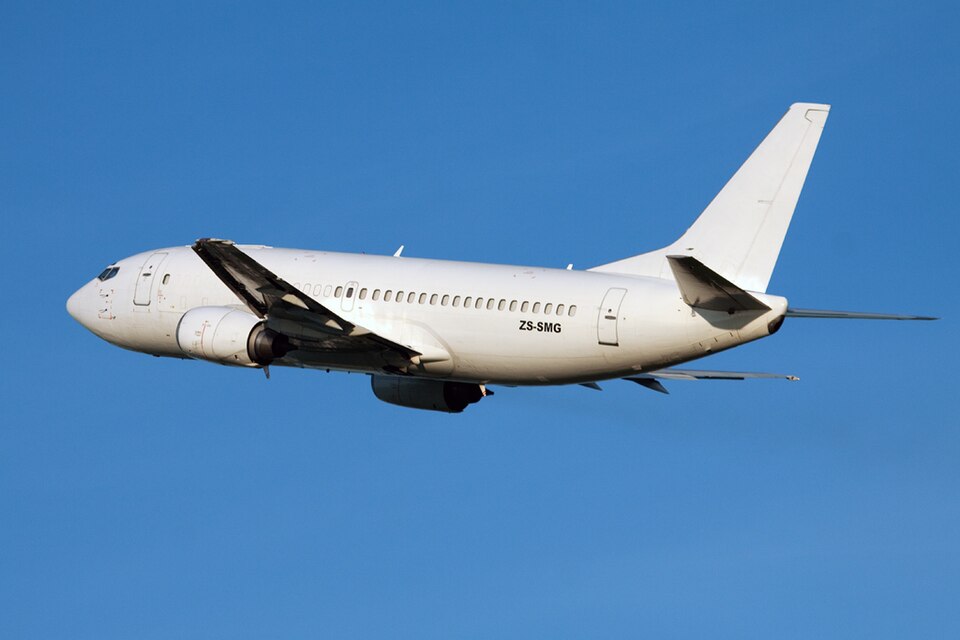
On 11 February 2010, a Boeing 737-300, registration ZS-SMG, was conducting a routine cargo flight from OR Tambo International Airport to Cape Town International Airport. During the takeoff roll at OR Tambo, the number one main outboard wheel assembly detached from the aircraft axle. Despite the high-energy event, the pilot reported no unusual vibrations during the takeoff or the subsequent landing.
Upon arrival at Cape Town, ground personnel alerted the crew that the outer main wheel assembly was missing. While the aircraft landed safely and the two occupants escaped without injury, the aircraft sustained damage to the inner left aft trailing edge flap. A search of the runway at Cape Town was unsuccessful, but the missing wheel was eventually recovered by grass cutters at OR Tambo International several days later.
The investigation
SACAA AIID investigators examined the wheel assembly and the maintenance history of the aircraft. The investigation focused on the period following 30 December 2009, when a replacement wheel assembly had been installed after a tire reached its wear limit.
Technical analysis of the recovered components revealed that the inner bearing remained on the axle, but the outer bearing had been completely destroyed. Furthermore, the wheel nut and anti-skid sensor had been sheared off at the end of the axle. Inspection of the aircraft's left flap revealed two 1 cm holes, which were caused by metal shards ejected from the disintegrating bearing.
Findings
The investigation established that the primary cause of the incident was the installation of an incorrect bearing into the wheel assembly. Specifically, bearing part number 596 was fitted instead of the required part number 598. Although the difference between the two parts is only 8 mm, this discrepancy led to the catastrophic failure of the outer main wheel bearing and the associated nut during takeoff.
Several contributing factors were identified:
- The wheel assembly was put together by an unskilled worker rather than a qualified technician.
- The technician was working under extreme pressure in the tire section.
- The part numbers (596 and 598) were visually similar, making the error easy to overlook.
- There was a lack of oversight regarding the cleaning and storage of bearings, which allowed for the potential mixing of different part numbers.
Safety action
Following the findings, the Director of Civil Aviation issued a recommendation for the operator to inspect the entire fleet, including all wheel assemblies in storage and at outstations, to ensure the correct part numbers are installed. Additionally, the regulator was advised to increase oversight regarding the qualifications and training of personnel performing specific maintenance tasks and to improve follow-up on operator action plans.