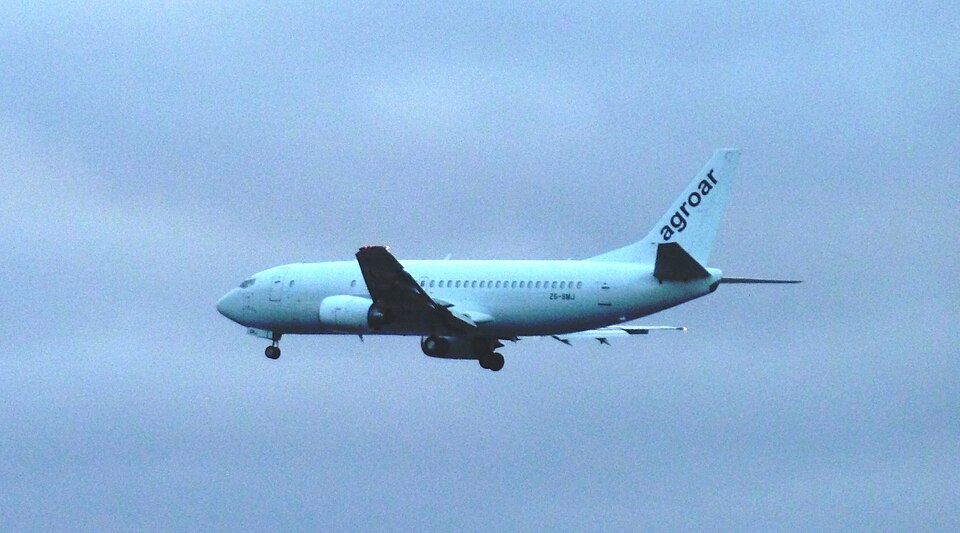
Incident Overview
On the evening of 10 September 2013, ZS-SMJ, a Boeing 737-300 with serial number 23500, departed from Cape Town International Airport (FACT) as flight SA6836 operated by SAFAIR. The intended destination was Port Elizabeth Airport (FAPE). While climbing through flight level 170, the captain's primary flight instruments failed. The flight crew continued the ascent to flight level 210.
Smoke and Electrical Failure
Shortly after reaching FL210, the captain detected a burning smell and observed a significant amount of smoke emanating from behind and to the left of his seat. The smoke originated from the circuit breaker panel. The crew noted that circuit breakers C498 and C425 had popped. In response, the crew declared a mayday with the terminal control area and notified controllers of the situation. They executed the 'Smoke, fire or fume' checklist from the quick-reference handbook.
Diversion and Landing
The aircraft promptly turned back toward Cape Town. Approximately three to four minutes later, the smoke began to dissipate. The captain's primary flight instruments remained unserviceable for the remainder of the flight. The first officer flew a monitored approach to minimums (200 feet for a CAT I approach on runway 01), after which the captain took control and performed a visual landing. The landing on runway 01 was normal, with aerodrome rescue and firefighting personnel standing by. No injuries were reported, and the aircraft sustained no damage.
Investigation Findings
The investigation determined that an electrical system failure caused the aircraft to return to Cape Town. However, the specific root cause of the failure could not be identified. The aircraft was equipped with a certificate of airworthiness, and all relevant documentation was found valid. The flight data recorder and cockpit voice recorder were not removed for analysis because the circuit breakers had been reset before the investigator-in-charge arrived.
Weather and Communications
Weather at the time included wind from 200 degrees at 12 knots, visibility greater than 10 kilometers, no cloud, temperature 13°C, and dew point 6°C. Communications between air traffic control and the crew were normal throughout.
No pre- or post-impact fire was reported. The aircraft was parked at Cape Town after the incident.