Incident Overview
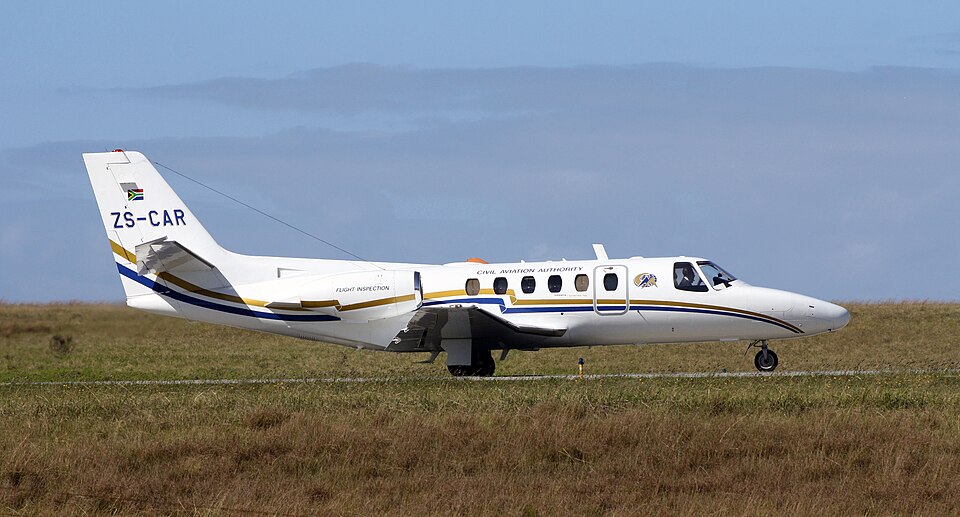
On 6 February 2016, a Cessna S550 (registration ZS-CAR) operated by the South African Civil Aviation Authority (SACAA) Flight Inspection Unit was involved in an incident at Lanseria International Airport (FALA). The aircraft departed runway 07 at 0520Z for an aerial work flight. The pilot-in-command (PIC), accompanied by two other pilots, intended to return to FALA after the flight.
Sequence of Events
During the take-off roll, the aircraft's pressurisation system failed, causing rapid depressurisation at a rate of 6,000 feet per minute. The PIC executed a rejected take-off (RTO) on the runway. The high temperature generated by the brakes during the RTO caused the aircraft's tyres to deflate. After the aircraft was shut down, it was recovered to the operator's facility at FALA. Damage was limited to the tyres, which required replacement. No injuries were sustained by the three crew members.
Aircraft and Crew Information
The aircraft had a valid Standard Certificate of Airworthiness and was authorised for operations under CAR Part 135. All three crew members held valid licences with appropriate ratings, valid aviation medical certificates, and were considered medically fit. They were familiar with the aircraft's performance and capable of safely performing their duties. A pre-flight inspection had been carried out, and the aircraft was found to be airworthy. Fuel quantity and weight were within limits, and no pre-existing anomalies were identified.
Investigation Findings
The investigation determined that the pressurisation failure was caused by a malfunction of the pressurisation system. The loss of cabin pressure had occurred on previous occasions, and maintenance actions, including inspection of piping from the pneumatic relay to outflow valves and operational checks, had been performed. The pneumatic relay was found faulty and was replaced with a serviceable unit. The PIC's decision to conduct an RTO was considered good airmanship, as the flight could not safely continue with the loss of cabin pressure.
Conclusion
The probable cause of the incident was a pressurisation failure during take-off from FALA, which necessitated a rejected take-off. The resulting high brake temperature caused the tyres to deflate. A contributing factor was the failure of the pneumatic relay.