History of Flight
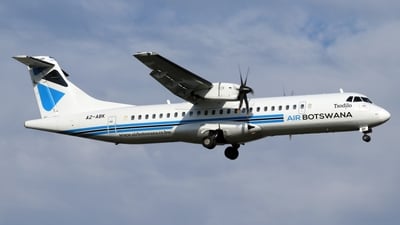
On 30 December 2021, at 1027Z, an ATR 72-600 aircraft registered as A2-ABK, operated by Air Botswana, was conducting a scheduled international commercial flight from O.R. Tambo International Airport (FAOR) in South Africa to Sir Seretse Khama International Airport (FBSK) in Botswana. The flight, operated under Part 121 of the Botswana Civil Aviation Regulations, carried two flight deck crew, two cabin crew, and 70 passengers. Visual meteorological conditions prevailed.
During the climb, while passing flight level 87 (FL87), the crew observed that the torque indication for engine number 2 (ENG 2) fluctuated and the Interstage Turbine Temperature (ITT) increased by approximately 40°C. As the aircraft continued climbing, at FL140, the ENG 2 fire warning light illuminated. In response, the crew shut down the engine and initiated an air turn back to FAOR. The aircraft landed safely on Runway 03L without further incident.
Injuries and Damage
No injuries were reported among the crew or passengers. The aircraft sustained minor damage, limited to the right engine.
Probable Cause and Contributory Factors
The investigation determined that during the climb phase, three PT2 blades of the hot section fractured on the chromium-coated section. This led to the failure of all three blades in-flight, which subsequently caused other component failures in the engine, prompting the crew's decision to shut down the engine.
A contributory factor was that the three chromium-plated PT2 blades had been subjected to sulphidation, which led to the fracture during operation.
Investigation Details
The South African Civil Aviation Authority's Accident and Incident Investigations Division was notified on 31 December 2021. The occurrence was classified as a Category 1 serious incident. Notifications were sent to the State of Registry, operator, and design/manufacturer. The State of Design appointed an accredited representative and advisor.