Incident Overview
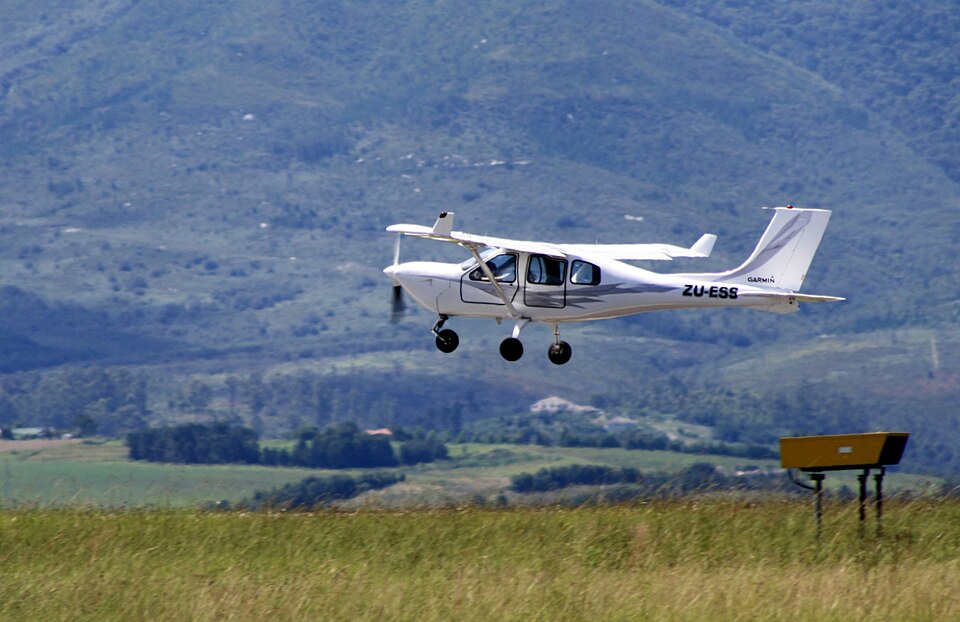
On 20 February 2026, a Jabiru J430 aircraft, registration ZU-ESS, departed from Witbank Aerodrome (FAWI) in Mpumalanga province for a private flight to Deneysville Airfield in the Free State province. The flight was conducted under visual meteorological conditions (VMC) by day, operating under Part 94 of the Civil Aviation Regulations. The aircraft was powered by a Jabiru 3300 6-cylinder engine and had accumulated 1,421.1 total hours.
Sequence of Events
During the en route phase, approximately 30 kilometers south of Heidelberg, Gauteng province, the pilot observed a failure of the engine RPM indicator. Shortly thereafter, the aircraft's GPS unit malfunctioned, followed by a loss of radio connectivity and functionality of other electronic instruments. Concerned about a potential on-board fire, the pilot sought a suitable area for a precautionary landing.
The pilot reported that the engine began vibrating, although all engine parameters appeared normal. He identified a grass airstrip on a private farm ahead of his flight path. However, the aircraft was too high for a direct approach, prompting a go-around. The pilot then configured the aircraft with 30 degrees of flaps and approached at a speed of 60 knots. During the landing, the aircraft touched down hard on the main landing gear, causing a bounce. After the bounce, engine vibration increased. Upon the second touchdown, the engine stopped during the landing roll. The aircraft came to rest on the right side of the runway. The pilot switched off the ignition and disembarked. Hand-rotating the propeller revealed that the crankshaft rotated freely with no compression. The aircraft sustained minor damage to the propeller blades. Neither the pilot nor the passenger were injured.
Investigation Findings
A teardown inspection of the engine was conducted at an aircraft maintenance organization. The inspection revealed scoring marks on the journals and metal shavings within the crankcase. The crankshaft (serial number 36424F-33A-104) had fractured between the Number 2 main journal and the Number 1 big end journal. The crankshaft journals were measured to be 0.010 inches undersized relative to the standard dimension specified in the overhaul manual. The main bearing shells fitted to the crankshaft were also 0.010 inches undersized, indicating a mismatch that resulted in excessive crankshaft end float. This condition had damaged the front side faces of the connecting rods.
The aircraft had a valid Authority-to-Fly certificate and had undergone its last 100-hour annual inspection on 30 September 2025, with 3.6 hours accrued since then. The pilot held a valid Private Pilot Licence and a Class 2 medical certificate with a restriction to wear corrective lenses. The pilot had accumulated 92.6 hours on the aircraft type.
Probable Cause
According to the investigation report, the probable cause was an unstable approach during a precautionary landing, which resulted in the aircraft bouncing and the propeller striking the soft ground. A contributing factor was poor landing technique.