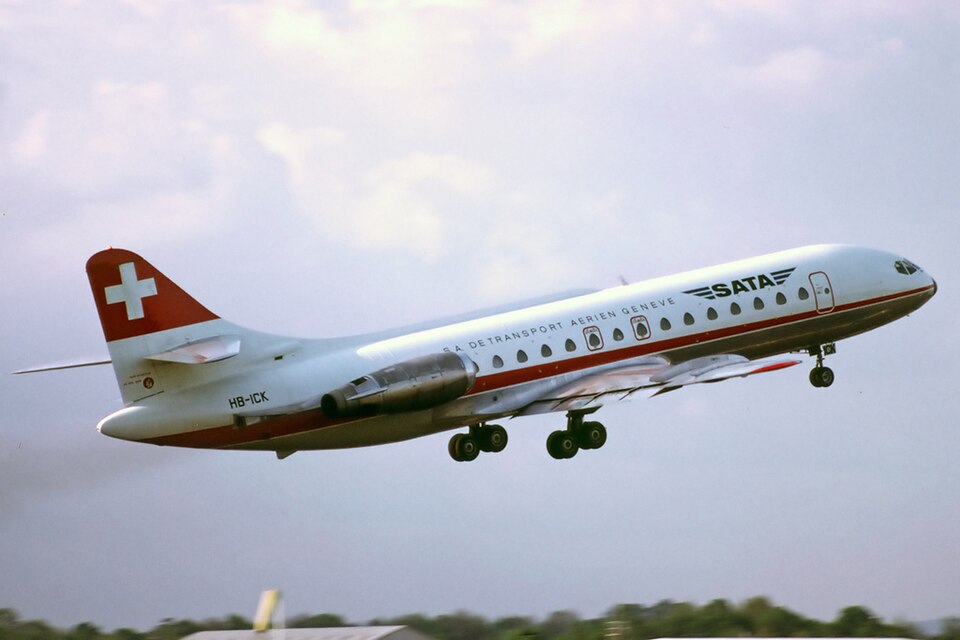
Incident Overview
Flight VS730 was an international charter service from Zurich to Funchal, with an intermediate stop at Geneva-Cointrin Airport, Switzerland. The flight crew consisted of two captains. A new captain occupied the left-hand seat and was piloting the aircraft. The second captain, seated in the right-hand seat, was acting as pilot-in-command, responsible for initiation to Funchal, route check pilot, and co-pilot. Initiation of the new captain was necessary due to the difficult approach and landing at Funchal; however, this initiation was required to be conducted by day.
Flight Progress
The aircraft departed Geneva at 1626 local time, bound for Madeira Island. At 1938, the crew contacted Madeira control, reporting overhead Rose Point at flight level 330. The aircraft was cleared to leave this flight level at 1941. The crew requested descent instructions and received clearance to descend to flight level 50, with instructions to contact control again when that level was reached or when overflying the Porto Santo (PST) NDB. At 1955, the crew reported being overhead PST at flight level 85. The aircraft was instructed to continue descent to flight level 50, then contact Funchal approach control.
Approach and Descent
At 1957, the crew contacted Funchal approach control, which stated that runway 06 was in service and cleared the aircraft to descend to 3,500 feet, with a QNH of 1014.0 mb. After being cleared for the approach, the crew descended below the 720 feet permitted during circling, even though they had lost sight of the runway. The pilots lost sight of the runway lights at the end of the downwind leg and at the beginning of the base leg, when the aircraft was already flying below 200 feet. The radio altimeter had probably been preset to 200 feet, but the pilots did not check its indications.
Ditching
The aircraft touched the water surface relatively smoothly in a flat attitude, bounced, then touched the water surface two additional times, and came to rest 4 km short of runway 06 threshold. The center of the fuselage fractured, causing water to enter the cabin. Few passengers were able to jump into the water, and the airplane sank to a depth of 600 meters two minutes after final impact. Seventeen bodies were never recovered, as well as both cockpit voice recorder and flight data recorder systems.
Probable Cause and Contributing Factors
Probable Cause: The accident was caused by an involuntary ditching during the approach. The fact that the aircraft was flying below the descent plan may have been due to a lack of coordination between the pilots and a sensorial illusion on the part of the crew, when it was preoccupied with the search for visual runway references.
Additional findings reported: The captain in the left seat did not have sufficient experience to land by night at Funchal Airport (this was his first flight to Funchal). Despite good weather conditions, the crew continued the approach by attempting to establish visual contact with the runway but without success. This caused the aircraft to pass the descent height and continue the approach below the minimum prescribed altitude until it impacted water. A light signal activated on the cockpit panel, but the crew failed to see it as they were trying to locate the runway. Lack of crew coordination and sensorial illusion were noted. A crew composed of two captains was dispatched on the flight; experience showed that such crew composition was not optimal as the captain seated in the right seat had too little experience as a copilot and was flying as an acting captain instead of a copilot. A possible malfunction of the altimeter was ruled out; all instruments were functioning properly at the time of the accident.