What happened
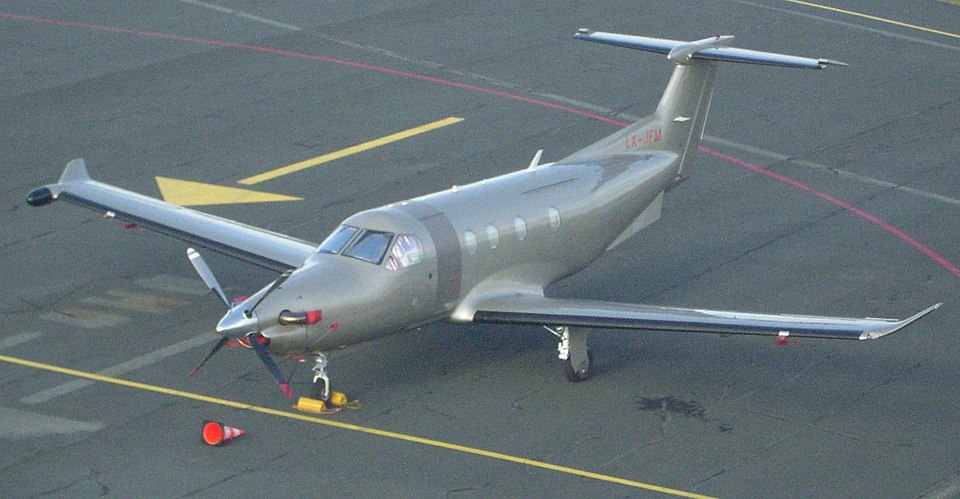
On January 23, 2015, a Pilatus PC12, registration LX-JFM, was conducting a flight for type renewal training. While performing an NDB approach to runway 18 at Saint-Étienne, France, the crew encountered significant aerodynamic disturbances. Approximately thirty seconds before passing the EB beacon, the aircraft began experiencing pitch oscillations that increased in amplitude, accompanied by sudden lateral movements.
The crew engaged the autopilot and noted heavy vibrations through the flight controls along the pitch axis. Due to intermittent visual references during the approach, the pilots initiated a descent to increase airspeed and regain visual conditions. The aircraft descended to approximately 800 ft AGL, where the crew regained visual contact with the ground and completed a normal landing with an excess of 20 knots.
Upon parking, the crew inspected the de-icing boots and found that the pneumatic system had functioned correctly. However, they discovered a 4 to 5 cm thick accumulation of ice on the horizontal stabilizer in an area not covered by the de-icing boots.
The investigation
The investigation was delegated to the Swiss Transportation Safety Investigation Board (SUST) by the French BEA as the state of manufacture. Investigators analyzed meteorological data, which showed temperatures of 0°C at ground level and a dew point of 1°C, with heavy cloud cover.
The crew reported flying in icing conditions for approximately four to five minutes prior to the encounter. Before passing the EB beacon, the aircraft was flying at 125 KIAS. The investigation established that the low-frequency pitch oscillations ceased once the pilot increased power and initiated a descent.
Findings
- The primary cause of the flight control disturbances was residual ice accumulation on the tailplane.
- Specifically, an ice horn measuring 4 to 5 cm in thickness formed on the horizontal stabilizer in a location unprotected by the pneumatic de-icing boots.
- The aircraft had been operating in icing conditions for several minutes prior to the onset of oscillations.