Accident Details
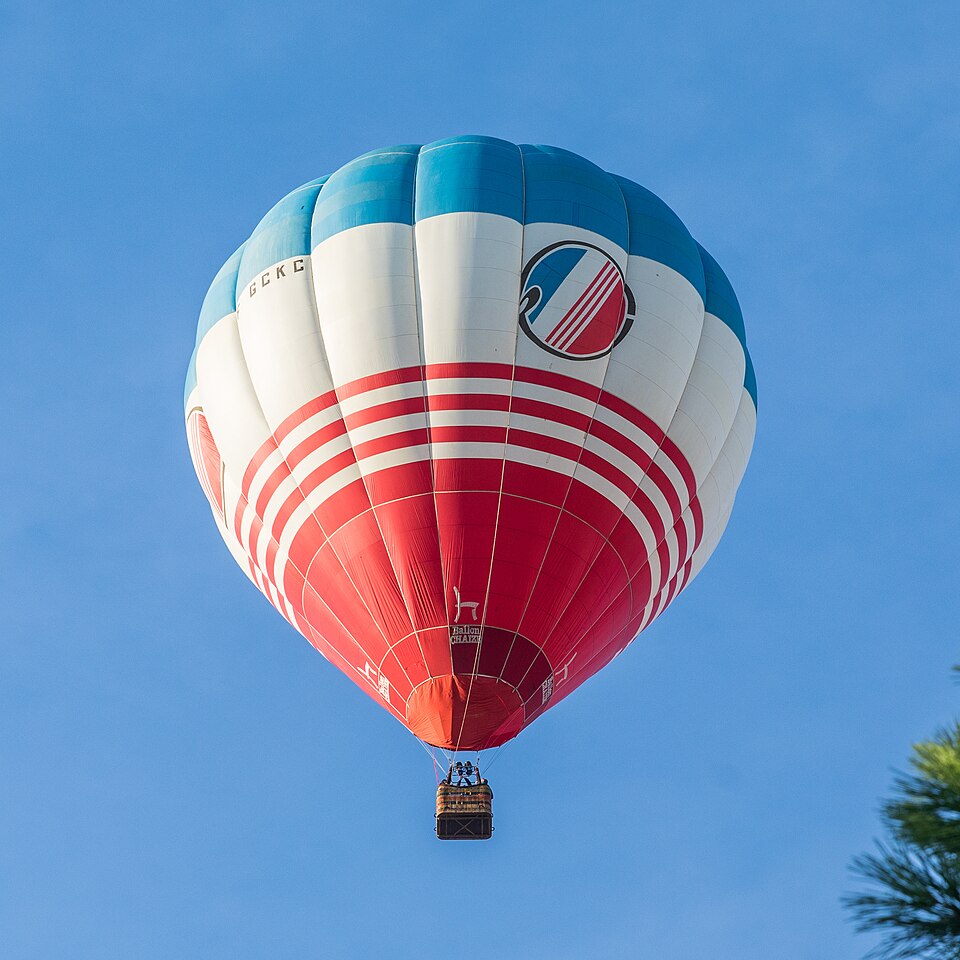
On Sunday, 14 September 1980, at 17:30 local time, the hot air balloon F-GCKC (Chaize CC 3000 F 16) departed from Château-d'Œx for a flight to drop two parachutists. On board were the pilot, a passenger, and the two parachutists. After the parachutists jumped from a height of 1500 m above ground (2450 m above sea level), the balloon was overflown twice by the helicopter HB-XFO (Alouette SA 315 B Lama).
The helicopter pilot believed the balloon was in difficulty. During the overflights, the rotor wake caused the balloon's top valve to open, and the balloon was pushed against a rock wall, where its envelope tore. The basket then fell approximately 150 m along the rock face, striking several rocks before coming to rest on stony ground.
Injuries and Damage
The pilot and the passenger were seriously injured. The balloon and basket were destroyed. No other injuries or damage were reported.
Aircraft Information
The balloon, manufactured by Chaize in 1980, had a special certificate of airworthiness issued on 17 March 1980, valid until 19 February 1981. Its registration was F-GCKC, and it was privately owned and operated. The helicopter, an Alouette 315 B Lama, was owned and operated by Heliswiss (Hélicoptère Suisse S.A.), based at Bern-Belpmoos Airport. Its certificate of airworthiness was issued on 27 November 1979, valid until 31 March 1984.
Pilot Information
The balloon pilot, a French national born in 1946, held a free balloon pilot license issued on 21 April 1977, with endorsements for instruction and radiotelephony. He had accumulated approximately 500 hours on hot air balloons, including about 20 hours on the accident model.
The helicopter pilot, a Swiss national born in 1944, held a professional helicopter pilot license issued on 1 February 1972, with endorsements for restricted radiotelephony, night flight, mountain landings, and various helicopter types. He had a total of 3,512 flight hours, with 801 hours on the Alouette 315 B Lama.
Meteorological Conditions
General weather was influenced by an anticyclone over western and central Europe, giving partly cloudy skies. Winds were light and variable aloft. At the accident site, visibility was about 50 km, sky few clouds (Sc/Cu around 1800-2000 m), temperature about 14°C, and turbulence negligible near the ground.
Events Leading to Accident
According to the balloon pilot, he was descending along a north rock wall at a distance of about 50 m with a horizontal speed of 2 km/h when the helicopter approached. The helicopter pilot, after being alerted by his passenger, decided to reconnoiter. He made a first pass near the basket to read the registration and attempt radio contact, but the balloon had no radio. He then overflew the balloon to assess its position relative to the wall. The balloon pilot made a thumbs-up gesture to indicate all was well, but this was not noticed. The helicopter pilot then made a second pass over the balloon. This time, the rotor wake opened the balloon's parachute valve, and the balloon was pushed against the rock wall. Despite heating to compensate, the envelope contacted the rock and tore at the equator.
Cause
The cause of the accident was that the helicopter pilot approached too close to the balloon. A contributing factor was that the balloon pilot intended to perform a somewhat difficult descent maneuver along a rock wall.