What happened
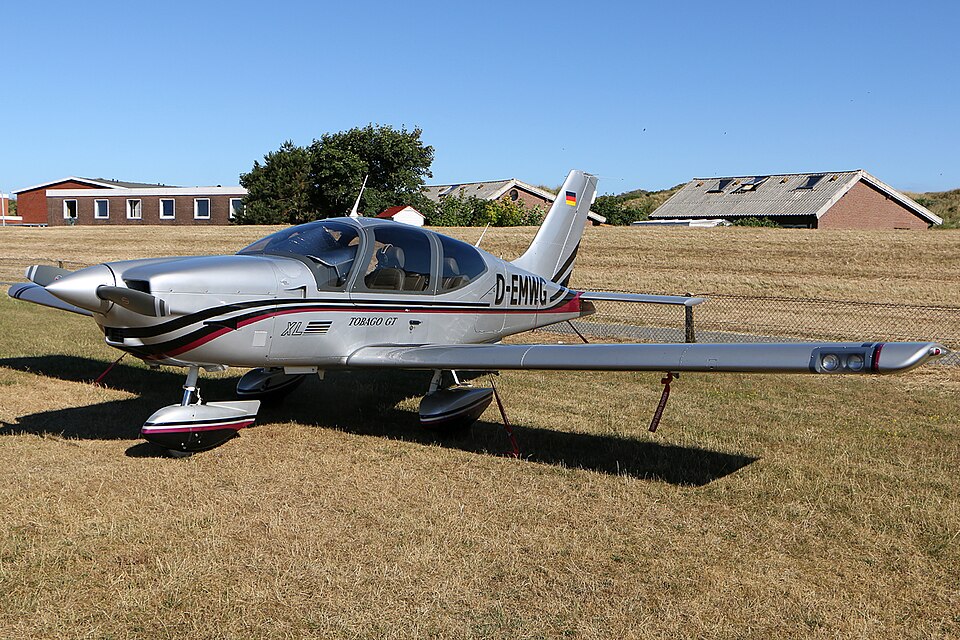
On July 12, 1985, at approximately 13:51 local time, a Piper PA-32-300 aircraft with registration D-EMWG departed from Stuttgart Airport in West Germany. The pilot was conducting a Visual Flight Rules (VFR) flight to Sion, Switzerland, carrying two passengers. One of the passengers was undergoing training for a private pilot license.
The planned route involved flying via the Willisau VOR and Lake Thun toward Sierre and Sion. However, due to meteorological conditions in the Kandersteg area, the pilot deviated from the intended path and entered the narrow Ueschinental valley near Kandersteg at a low altitude of approximately 1800 meters. The valley entrance was around 1600 meters, but the terrain rose steeply toward the southwest.
Witnesses observed the aircraft maneuvering within the confined space of the valley, attempting to gain height by circling and climbing near the rock faces. The pilot appeared to be aware of the deteriorating situation and attempted a turnaround at the end of the valley. However, the terrain was too steep and the valley too narrow to allow for a safe reversal. At 15:30 local time, the aircraft collided with a steep scree slope at the end of the Ueschinental. The impact destroyed the aircraft and killed all three occupants instantly, with one passenger succumbing to injuries the following day.
The investigation
The Swiss Transportation Safety Investigation Board (STSB) conducted an inquiry into the accident. Key findings included:
- The pilot held a valid commercial pilot license issued by the German Luftfahrt-Bundesamt, with recent experience on the Piper PA-32-300 type.
- The aircraft was airworthy, with weight and balance within limits, and fueled adequately for the flight.
- Weather conditions at the time included broken cumulus clouds with bases around 2000 meters and tops near 3300 meters, along with valley fog and limited visibility in the mountains.
- The pilot had likely descended to avoid cloud cover, entering the Ueschinental without sufficient altitude reserve.
- There was no evidence of mechanical failure or pilot incapacitation. The engine was operating at full power at the time of impact.
Findings
The accident was caused by incorrect mountain flying tactics, specifically:
- Entering a narrow valley without adequate altitude reserve.
- Missing the last opportunity to turn around before entering the confined space.
Contributing factors included:
- Confusion between two parallel valleys running in the same geographic direction (Ueschinental and the Stock-Gemmi valley).
- Lack of experience in mountain flying.
The pilot failed to recognize the limitations of the terrain and weather, leading to a fatal collision with the ground.
Safety action
The investigation highlighted the importance of thorough pre-flight planning for VFR flights over mountainous terrain. Pilots are advised to study local topography carefully and adhere to recommended VFR routes on ICAO charts. Deviations from planned routes should be avoided unless sufficient altitude and escape options are available.