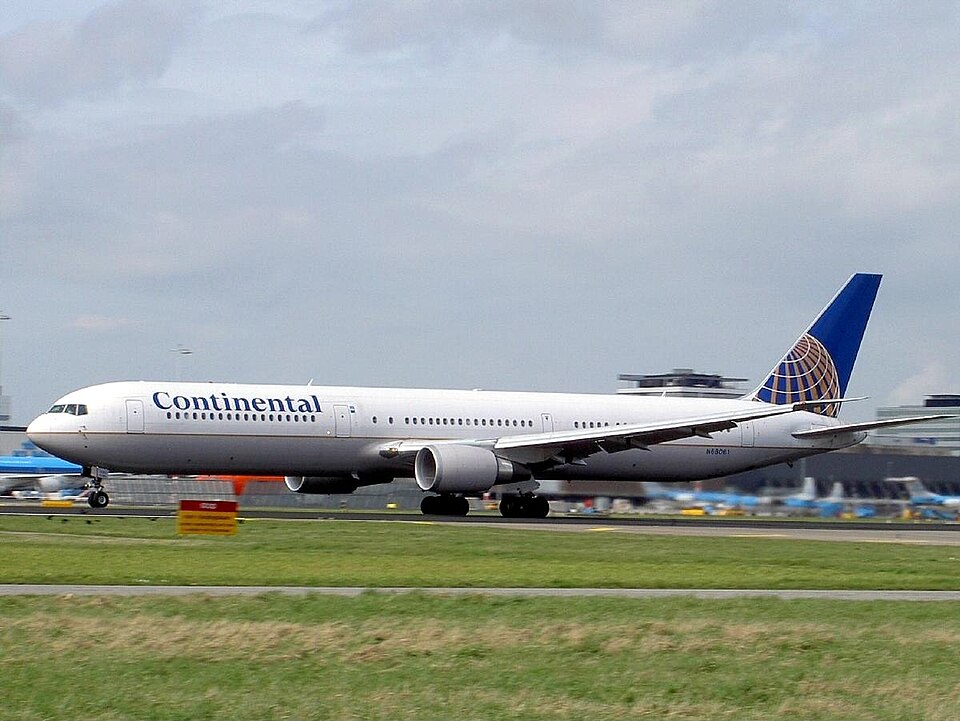
Course of Events
The Boeing 767-424ER, registered N68061, departed Zurich Airport (LSZH) at 10:10 UTC on 23 August 2017 for a scheduled flight to Washington Dulles. The flight crew comprised a pilot in command (PIC) and two first officers (FO1 and FO2). During takeoff, the PIC noted slight ear popping, which he regarded as normal. While climbing through approximately 8,000 ft, he experienced ear popping again, prompting him to check the pressurization gauge. He observed that the cabin altitude was increasing at an unusually high rate. The crew requested and received clearance to climb to FL 100. At that time, the Engine Indication and Crew Alerting System (EICAS) displayed the warning FWD EQPT VAL, and the 'valve' warning light illuminated on the equipment cooling panel. FO2 ran the corresponding checklist and turned the selector switch from AUTO to STBY. Cabin pressure stabilized, but the 'valve' light remained on, indicating pressurization could not be assured.
Despite this, the PIC opted to climb further, citing safety concerns at FL 100 due to potential visual flight rules traffic and terrain. The crew requested and received clearance to FL 130. During this climb, cabin pressure increased normally. The crew decided to continue along the planned route. Four minutes later, they requested further climb to FL 230. At 10:27 UTC, at approximately 19,500 ft over Audincourt, France, the PIC experienced severe ear popping and noticed the cabin altitude rising rapidly. The crew initiated an immediate descent, donned oxygen masks, and transmitted a mayday. The 'cabin altitude' warning illuminated, indicating cabin altitude exceeded 10,000 ft. However, cabin oxygen masks did not deploy, meaning the cabin altitude never exceeded 13,500 ft.
The descent was cleared promptly. The pilot flying descended to FL 100 with idle thrust, speed brakes extended, and autopilot off. Radar vectors were provided. At 10:34 UTC, the aircraft entered a holding pattern at FL 100 east-northeast of Dijon. FO2 assumed radio duties, FO1 continued flying, and the PIC contacted the airline and maintenance. The cabin pressure problem could not be resolved with ground support, and the crew decided to return to Zurich. After jettisoning approximately 35,000 lbs of fuel and burning another 30,000 lbs, the aircraft landed on runway 16 at 12:09 UTC. The PIC kept cabin crew and passengers informed throughout; no one noticed the unusual cabin altitude changes.
Findings
Post-flight examination revealed:
- The equipment cooling overboard exhaust valve was fully open.
- Its electrical connector was unplugged.
- The air duct connected to that valve was severely damaged (burst).
- No fragments of the damaged duct were found.
- The rotary switch on the equipment cooling panel was in the STBY position.
Further investigation showed that during pre-flight preparation, the flight crew had noticed the status message FWD GND EXH VAL on EICAS. Two licensed technicians from SR Technics conducted an error analysis and determined that the AVS/IFE inboard/outboard exhaust valve 1 was defective. In coordination with United Airlines' maintenance control center, they decided to deactivate that valve per the Minimum Equipment List (MEL). One technician later studied the deactivation procedure, which involved pulling the circuit breaker, unplugging and securing the electrical connector, manually opening the valve, and placing a warning sticker in the cockpit. He returned to the aircraft without written procedures and mistakenly deactivated the equipment overboard exhaust valve instead of the intended valve. He did not apply the warning sticker; the flight crew later applied one themselves. The STSB noted inconsistent terminology in maintenance documents: the valve was sometimes called AVS/IFE inboard/overboard exhaust valve.
Analysis and Conclusions
The equipment cooling overboard exhaust valve normally closes automatically when the rotary switch is in AUTO and both engines are running on the ground or when airborne. Because the technician mistakenly unplugged the valve's connector, the valve remained fully open even after the flight crew set the switch to STBY. The air duct to that valve was not designed for large pressure differences, as the valve is intended to be closed in flight. With the valve open, cabin air escaped unimpeded. The crew observed that cabin pressure stabilized temporarily after switching to STBY, likely because the fan stopped actively moving air. However, during continued climb, the pressurization system could not compensate for the leak, causing cabin altitude to rise again. At about 19,500 ft, the warning triggered, and the crew executed an emergency descent. The air duct burst due to the pressure differential. The source states that the technician's error—unplugging the wrong valve's connector—led to the open valve and subsequent loss of pressurization.